The equity market’s resilience faces a crucial test as multiple headwinds begin to erode investor confidence toward risky bets, especially the tech space which has powered much of the upside in the extended bull run witnessed since late-2022.
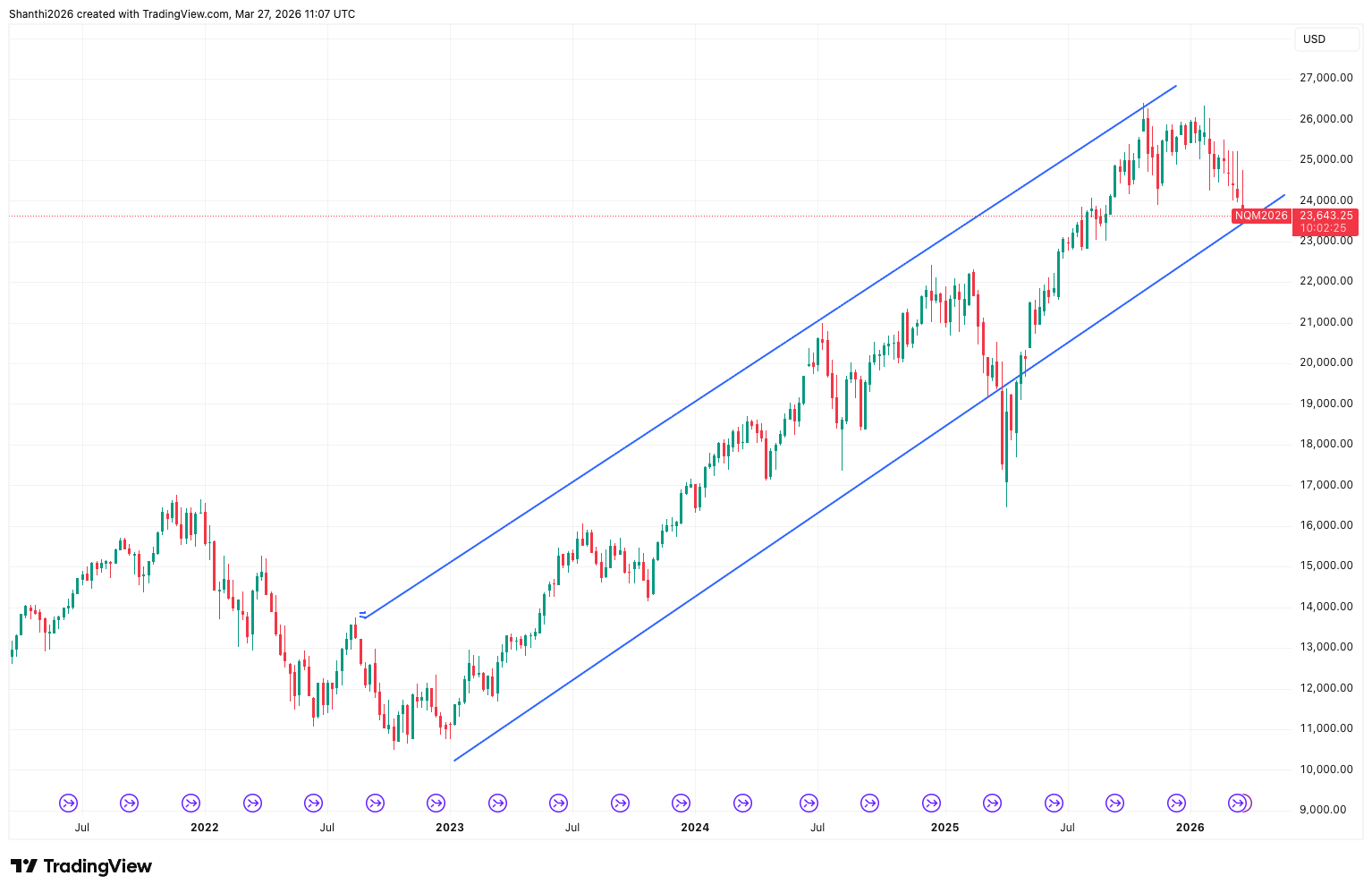
Dragged by the worsening sentiment, the Nasdaq 100 E-mini futures contract (NQ) tied to the Nasdaq 100 Index of 100 leading non-financial tech stocks, fell nto correction territory, defined as a decline of more than 10% from a recent high.
Fatigued after Prolonged Run? The NQ futures has staged an extended runup since the October 2022 bear market bottom, with the uptrend remaining largely intact, interrupted only by the sell-off that followed President Donald Trump’s Liberation Day tariff announcement in April 2025.
Source: TradingView
What has changed now? Just as the global central bank were beginning to sniff a victory over persistently high inflation and just as investors were beginning to breathe easy, hoping for the monetary policy to turn accommodative, the Iran war came as a nasty surprise. Knowingly or unknowingly, Trump engaged with Iran on the pretext of forcing the Islamic nation to give up on its nuclear ambition. But now Iran is not willing to back off.
The war that has raged on for 28 days now has severely impaired the global supply chains. Energy commodities have surged higher as Iran blocked the transit of oil and natural gas through the Strait of Hormuz, a critical oil chokepoint. Friday morning, the ICE-traded Brent crude futures topped $110 a barrel as Iran continues to show defiance.
Higher energy prices are widely expected to ripple across the entire supply chain, threatening a resurgence in inflationary pressure. The results of a U.S. private sector activity surveyreleased this week showed rising input prices. S&P Global’s mid-month survey showed that supplier delivery times lengthened and input prices rising at the fastest pace in 10 months.
The immediate offshoot of rising inflation is global central banks delaying rate cuts, potentially even raising rates. If the oil shock dents growth, the economy would be left to contend with stagnation.
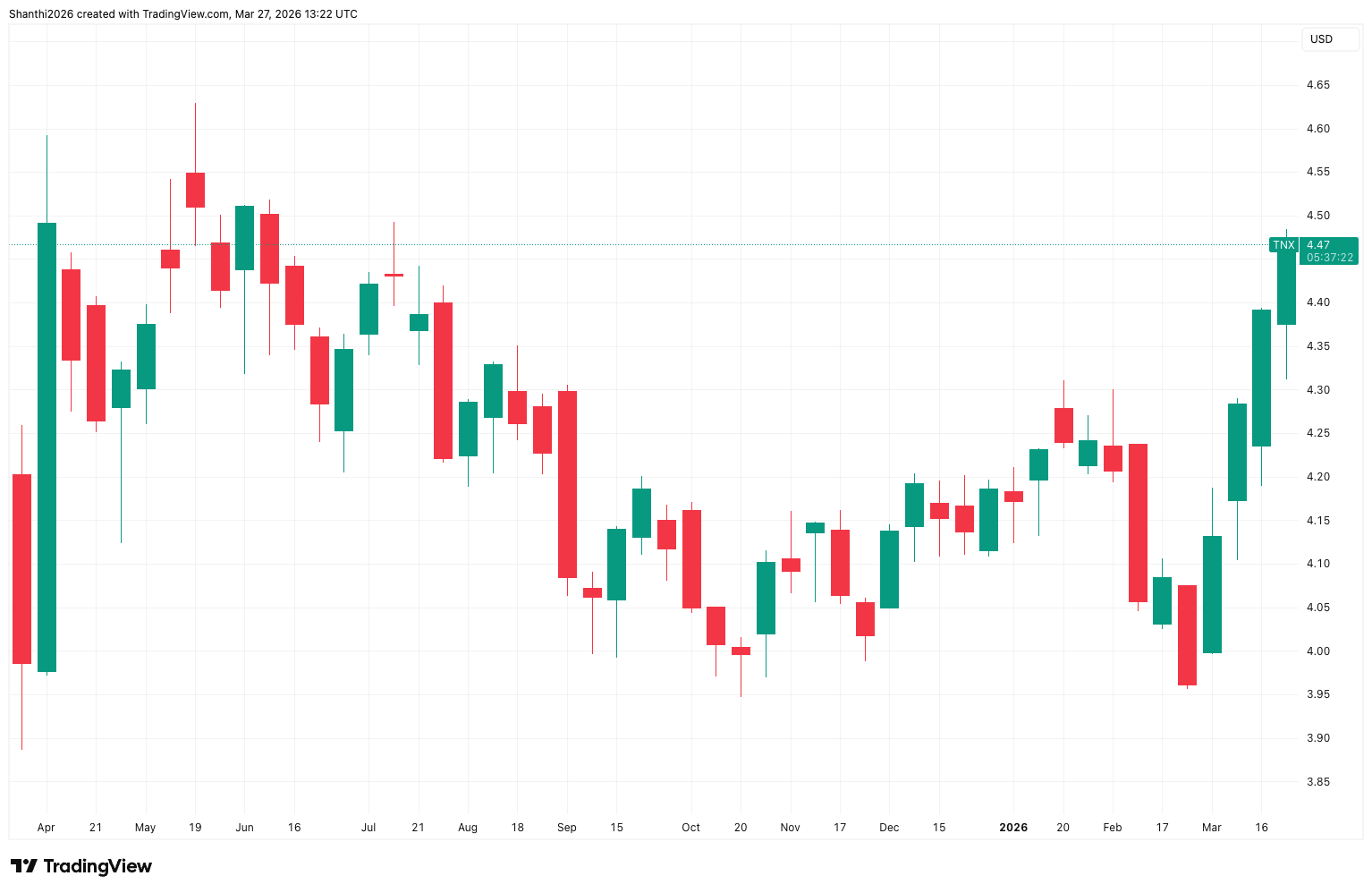
Factoring in the prospect of a higher interest rate environment, the 10-Year U.S. Treasury note yield has spiked to levels seen not in more than nine months.
10-Year T-Note Yield
Source: TradingView
Tech’s Headwinds: Over and above the macro and geopolitical headwinds, the tech sector ails from fears that massive investments by hyperscalers, primarily big techs, into artificial intelligence (AI) may not deliver commensurate returns. Investors also fear disruptions across industries such as software.
In late January, when Claude large-language model (LLM) provider Anthropic launched Claude Code and Claude Cowork, designed to automate coding, legal, sales and data analysis tasks, shares of software, as well as other tech and legal services companies took a tumble.
On Thursday, the Nasdaq 100 Index (QQQ) fell 2.4%, in part by a ruling by a Los Angeles jury that found Alphabet’s YouTube and Meta liable for causing harm to a young user. The big-tech heavy index is seen extending the losses on Friday amid oil’s renewed climb.
Danish investment bank Saxo stated that the market near-term trajectory hinges on whether Trump’s 10-day extension cools oil or whether the market shrugs it off.