From being the best-performer in 2025, the South Korean market’s fortunes reversed, rather quickly, amid the Middle East tensions that began to aggravate over the weekend.
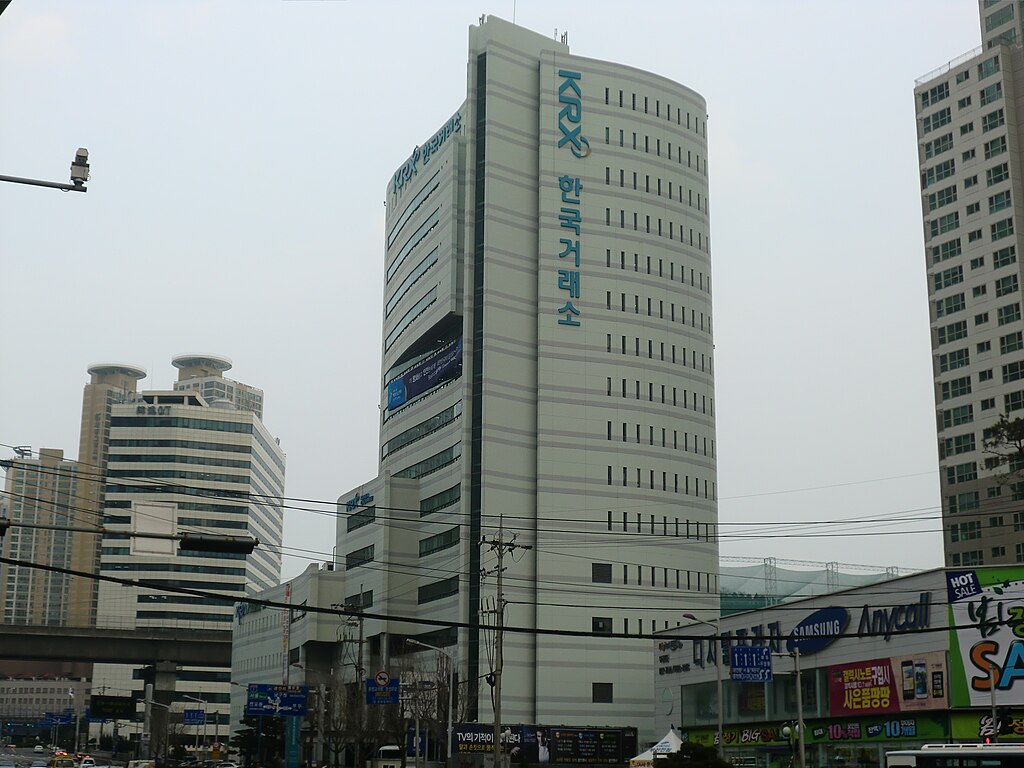
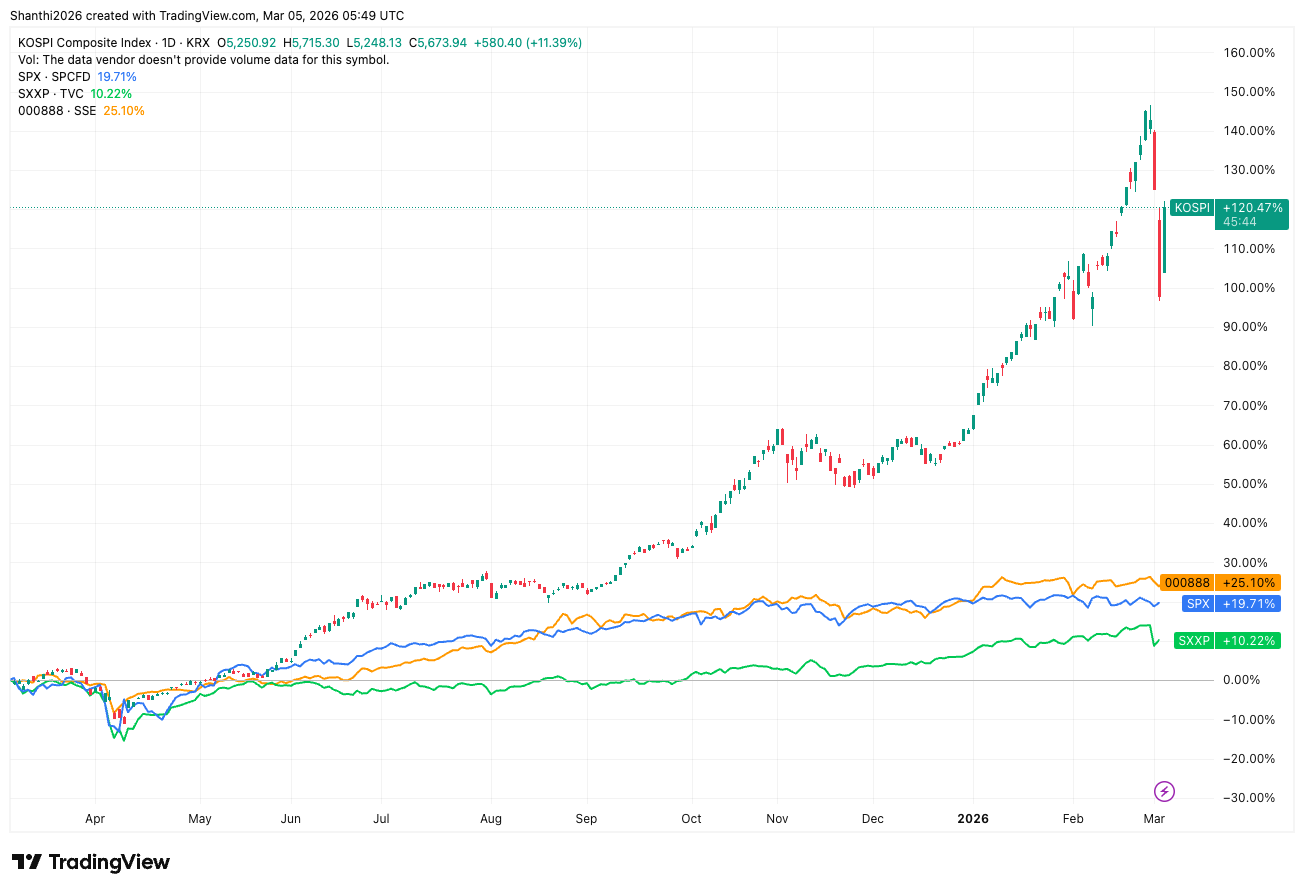
The Kospi Composite Index, the key barometer of the South Korean market, ended 2025 with an outstanding gain of 76%, thanks to strong performances by heavily weighted tech stocks.
Source: TradingView
The technology sector accounts for about 30% of Kospi’s market capitalization, according to a Reuters report. Much of the market’s gains last year have been driven by two tech giants leveraged to the artificial intelligence (AI) boom. Samsung Electronics and SK Hynix produce memory chips that have become supply-constrained inputs for AI systems and components.
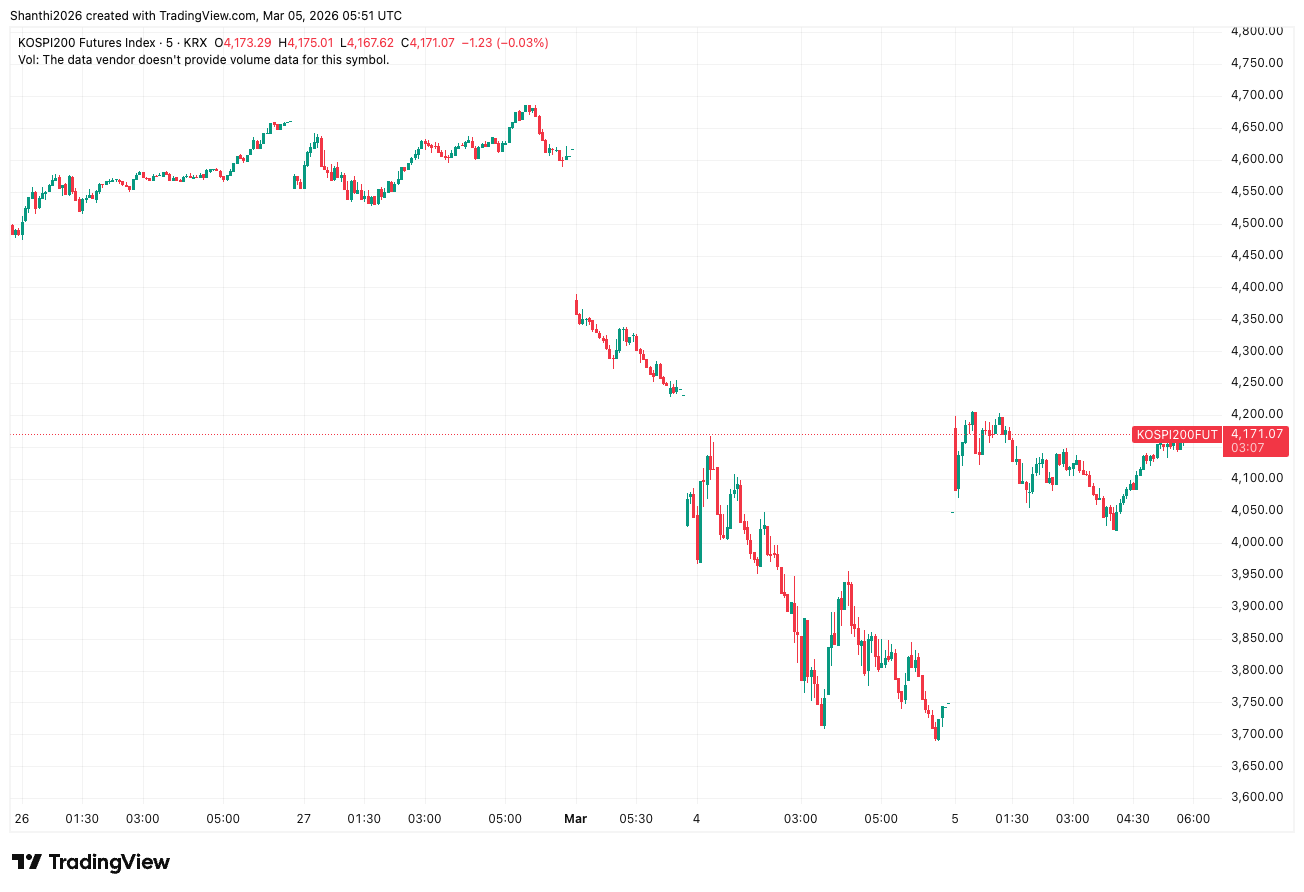
Wheels Come Off Rally: The Kospi 200 Index, which comprises 200 largest companies and accounts for over 90% of the total market capitalization of the Korean market, fell nearly 8% on Tuesday, as the market reopened after a public holiday on Monday.
The sell-off intensified on Wednesday as the index plunged about 12%, marking the worst drop since the 2008 financial crisis. The index has since staged a comeback, although it is still trading way off its pre-conflict levels.
The sell-off before Thursday’s bounce back was viewed with seriousness that Bank of Korea Governor Rhee Chang Yong reportedly delayed a flight to an IMF event to convene an emergency meeting, Bloomberg reported.
The Kospi 200 futures (K2I1!) contract tied to the contract also rebounded after the steep two-session pullback. The Korean Exchange had to activate the upward circuit breaker at 9:06 a.m. local time, pausing buy orders, after the KOSPI skyrocketed over 10%, Yonhap reported.
Incidentally on Wednesday, the exchange applied sell-side circuit breakers on Tuesday and Wednesday, when the major stock market gauges and stocks fell sharply on both days.
Source: TradingView
Thursday’s recovery came after rumors of Iran showing openness to negotiate with the U.S. revived risk appetite during Wednesday’s North American session. That said, the comeback may be on slippery grounds as the S&P 500 E-mini futures (ES) have turned lower again early Thursday and oil prices continued to push higher as the situation in the Middle East is far from offering comfort.
China Market Research Group founder and strategist Shaun Rein sees the Middle East conflict as a long drawn one. In a video clip of an interview with Al Jazeera, which he shared via LinkedIn, the strategist said U.S. President Donald Trump has miscalculated on Iran, thinking he could quickly change the regime as he did in Venezuela. If the war continues and oil climbs to $100 a barrel, the world will face a depression, he said.
Rein said the tension will last longer than people realize. “Trump has underestimated the religious vein coursing through Iran. They won't back down as easily….and many will be willing to become martyrs,” he added.
Professor Xueqin Jiang, dubbed as Chinese Nostradamus and the host of the popular YouTube channel Predictive History, has said in his recent videos that World War III has started and that this will last for months and even years. Incidentally, he had predicted the war in one of his lecture sessions in late 2024 and has also said that the U.S. will lose the war.
What Gave in? According to Dutch investment bank Saxo’s Chief Investment Officer Ruben Dalfovo, the week’s variable that upset the Korean market’s rhythm is energy. The West Texas Intermediate (WTI) grade crude oil futures (CL) trading on CME’s NYMEX has gained about 16% this week (taking the Asian session’s price).
Dalfovo said this has led to the market reprice not only oil but also reprice inflation risk, interest rates and profit margins across the economy. The strategist pointed out that Korea imports most of its energy, and higher oil prices could flow quickly into transport costs, factory costs and household bills.
“Korea’s sell-off shows how fast crowded trades unwind when oil shocks revive inflation fears,” the strategist said. Crowded trades happen when a significant number of investors, particularly the institutional investors, make unidirectional bets in the same asset, theme or strategy. In simpler terms, all betting in the same direction based on the same premise.
ING economists attributed the slump to safe-haven demand increasing, profit taking after the stellar run and program trading.
Despite the setback, the Kospi still remains above the 5,000 level, although of the record closing level of 6,307.
What the Future Holds: The South Korean economy faces a few headwinds, including the U.S.-Iran war. Government data released this week showed that the domestic industrial production unexpectedly declined in January. Specifically, the country’s chip production fell a seasonally adjusted 4.4% month over month but chip exports surged higher. Explaining the anomaly, ING stated that the strong price effects boosted export value even as actual production and export volumes declined steadily.
ING economists, however, said, “Higher oil prices and significant corrections in financial markets amid Middle East developments pose significant risks to a K-shaped recovery.” At this time, policymakers’ priority is to calm market anxiety. They do not believe the BoK will cut rates due to the recent market jitters. “Instead, while monitoring the market developments, the BoK is likely to increase market liquidity via its bond operations to stabilise the market. The government will also utilise its market stabilisation funds.”
Read Next: Dollar Futures Eye Non-farm Payrolls Report After Mixed ADP Jobs Data Signals Narrow Hiring Strength