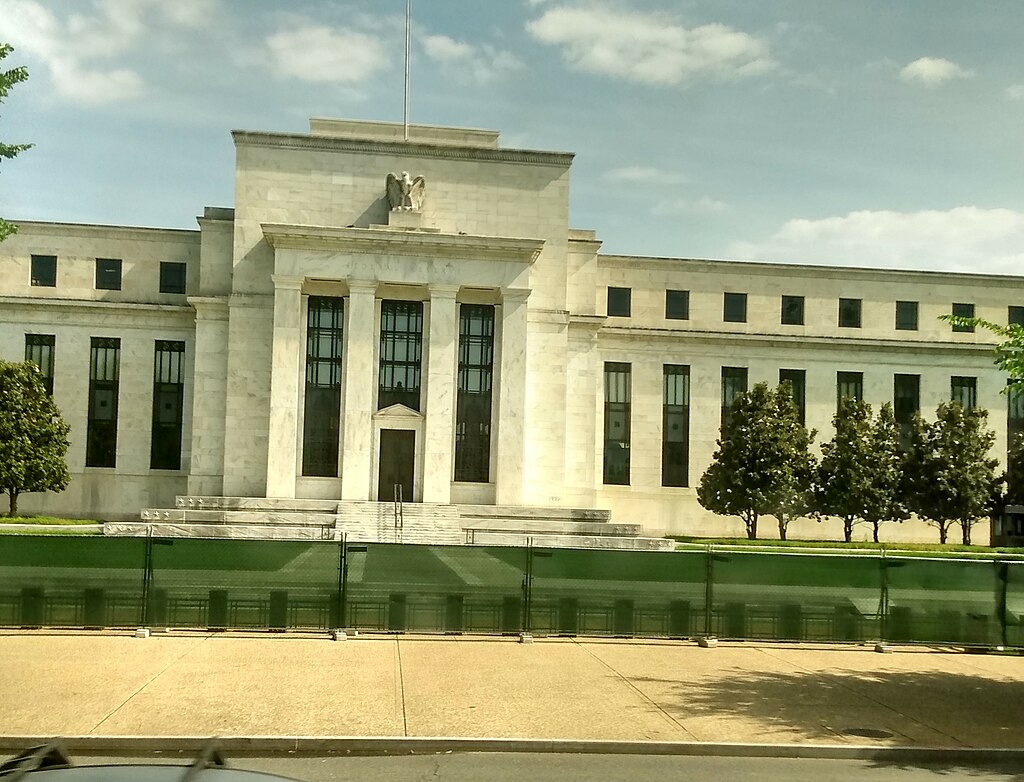
A Fed official said on Wednesday that the Federal funds rate is no longer restraining activity following the cumulative cuts implemented since 2024. Kansas City Federal Reserve President Jeffrey Schmid’s comments may not be way off, going by the fairly robust pace of expansion seen in recent quarters.
Resilient Economy: In prepared remarks delivered at the Economic Forum of Albuquerque in New Mexico, Schmid said the economy’s performance is the test to gauge whether monetary policy is accommodative or restrictive.
“With growth showing momentum and inflation still hot, I’m not seeing many indications of economic restraint,” the Fed official said.
Delving into the economic outlook, Schmid said the U.S. GDP expanded by 4.4% in the third quarter, and may have continued its stellar growth in the final three-month period of 2025. He singled out consumer spending and artificial intelligence (AI)-related investments as drivers of growth.
Aside from these, a fall off in labor market churn is contributing to productivity growth, Schmid said, adding that “More recently, my contacts broadly agree that we are now in a low-hire/low-fire/low-quit labor market.” The Fed official also expects the changes in tax policy to likely boost disposable income for many households, which should further support, and perhaps even broaden, consumer spending.
Inflation Risk: Schmid noted that inflation has run closer to 3% and not 2%. Therefore, he thinks it is appropriate to maintain a somewhat restrictive policy stance, which can help slow demand growth, giving supply time to catch up and alleviate inflationary pressures.
He also emphasized the importance of fighting inflation: “We must remain focused on our headline inflation objective, otherwise I believe there is a real risk that inflation will get stuck closer to 3% than 2% in the long run.”
Market Implication: Schmid’s remarks reinforce the case for a higher-for-longer rate path, suggesting traders may need to pare their aggressive rate-cut pricing and position for firmer yields.
This backdrop is typically bearish for Treasury futures (ZN/ZB) and supportive for the U.S. dollar futures (DX), while equity futures could face pressure if markets reprice the terminal rate upward.