A new report released Wednesday showed a deterioration in sentiment among businesses in Germany, with companies blaming the U.S.-Iran war for the predicament. The softening comes as a setback for the German economy, which was beginning to pick up steam.
The Euro Forex futures (6E) gave back some of its Asian session’s gains amid the data release but stayed in the green heading into the North American session.
The March survey collected responses from 9,000 businesses.
Expectations Drag Sentiment: The Ifo Institute’s Business Climate Index fell to 86.4 points in March from 88.4 points in February. The weakness was in the expectations component (down 4.2 points to 86) while the current situation remained unchanged at 86.7.
Ifo Business Sentiment Indices
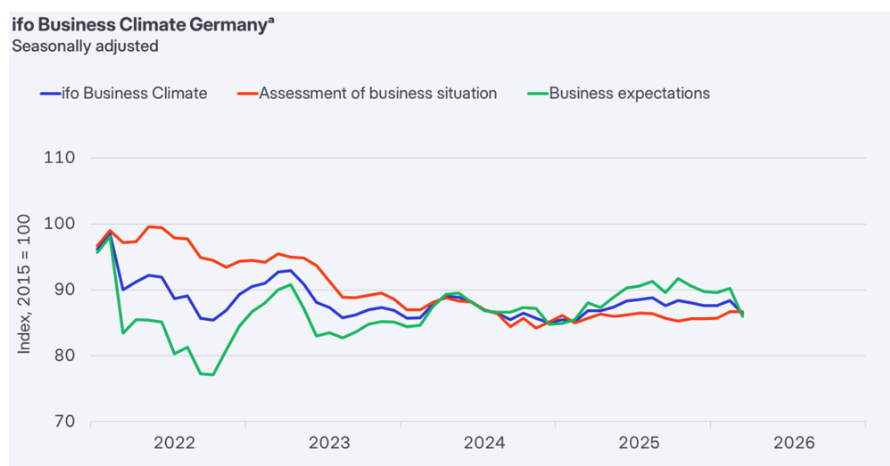
Source: Ifo
The survey showed that uncertainty among companies increased notably as the Iran war cast cloud on the recovery at least for the time being.
The U.S., along with Israel, has locked horns with Iran over the latter’s nuclear program, and the war, which is now 26 days old, has caused large scale disruptions in oil shipments through the Strait of Hormuz, a major chokepoint that connects the Persian Gulf with the Gulf of Oman and the Arabian Sea.
The supply shock has fueled a spike in global crude oil prices, which is threatening a slowdown in growth and a spike in inflationary pressure. This narrow stretch of waterbody serves as a conduit for about 20 million barrels per day (mb/d) of crude and natural gas from the region.
Across the Board Weakness: Ifo’s survey showed the weakness was all pervasive, hurting manufacturing, services, trade and construction.
The index corresponding to the manufacturing sector fell, reversing the increases seen in recent months. Expectations declined more significantly. Among the industries, energy-intensive ones showed marked weakness. The situation was no different in the service sector, with tourism and logistics being the worst hit.
Commenting on the data, ING Global Head of Macro Carsten Brzeski said, “The war in the Middle East is a risk for Germany's cyclical rebound but not (yet) enough to completely derail it, rather delay it.”
Risk-on Mood Buoys Euro: The U.S. assertion that negotiations are underway has helped reignite risk sentiment in the market. The markets largely shrugged off Iran's rebuttal of the U.S. President Donald Trump’s claims, factoring in a possible end to the war.
The contract tied to the exchange rate between the Euro and the USD has been rangebound since the middle of 2025. After touching the lower bound of the range in mid- March, 6E has begun tracking a short-term uptrend.
Euro Fx Futures (one-year chart)
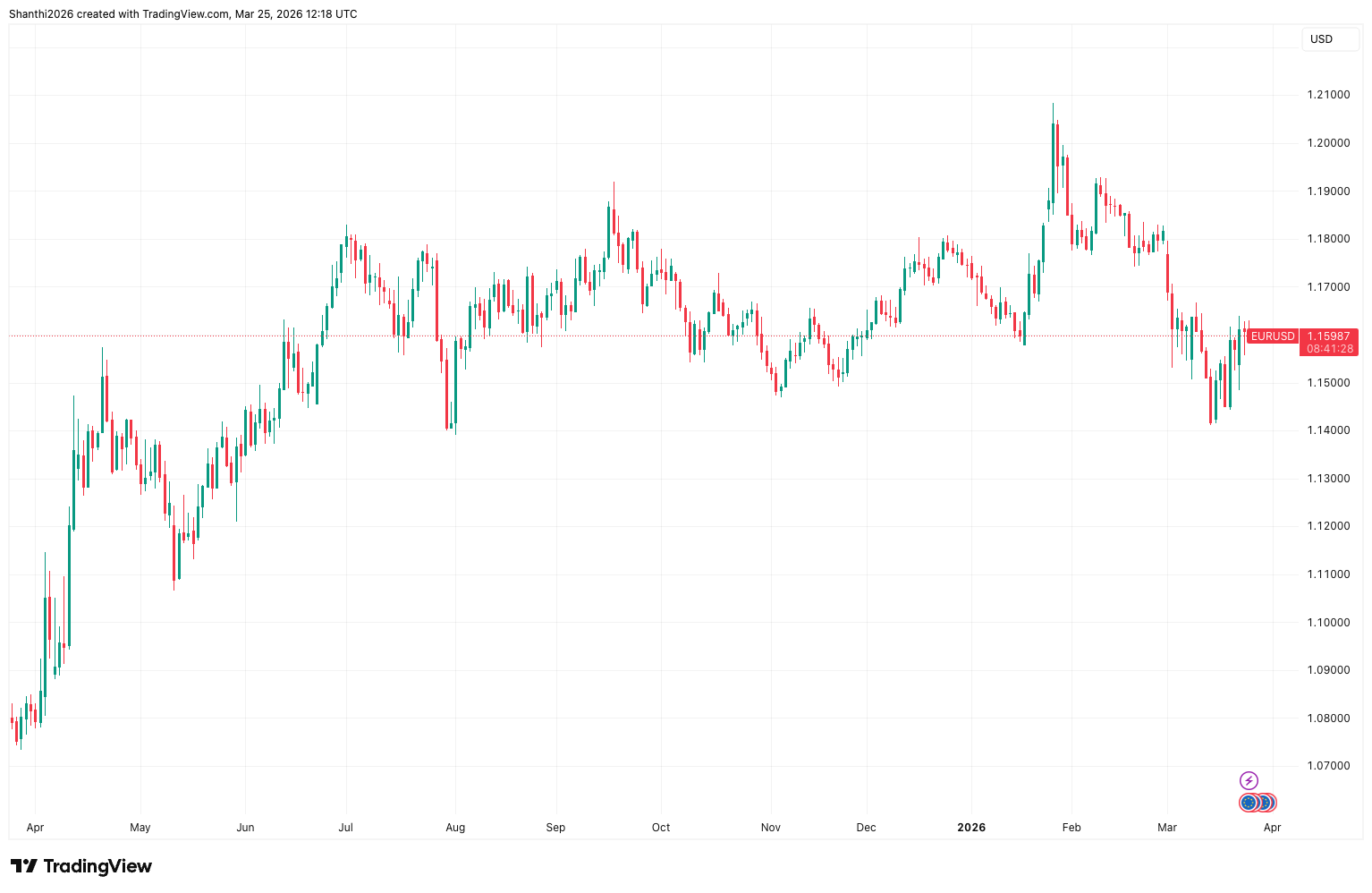
Source: TradingView
Saxo Head of Macro Strategy John Hardy attributed the recent euro strength to the “relative EU-US rate differentials at the front end of the yield curve as anticipated ECB rate hikes have accelerated more quickly than the markets removed FOMC rate cuts.”
Read Next: Asian Markets, Oil Accept Trump’s Assurance of Peace Talks Even as Iran Keeps the Noose Tight