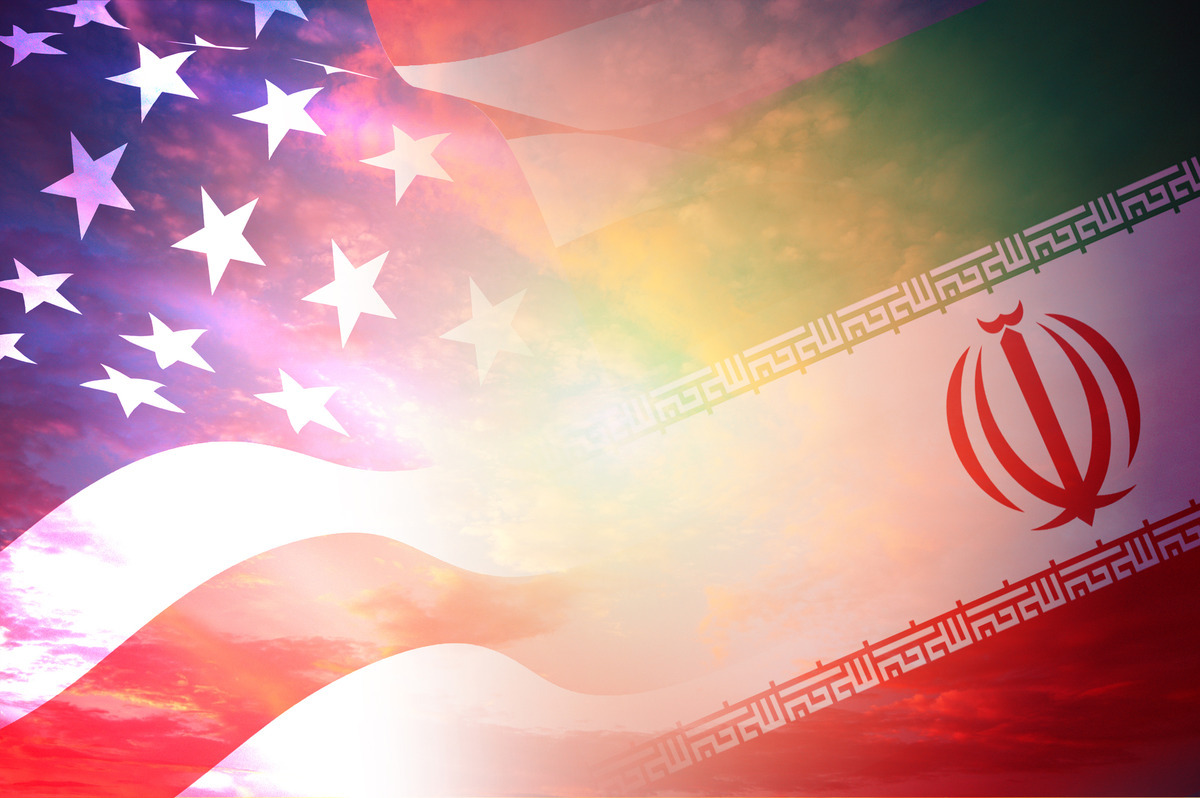
The growing urgency to end the war is evident as the 26-day U.S.-Iran conflict has compounded global economic uncertainty. Media reports suggested that the Trump administration has put forward a 15-point plan to end the war and that Pakistan is potentially mediating the talks between the warring sides.
The markets have construed the developments as positive as evidenced by the return of risk-on sentiment.
Trump’s Olive Branch: The 15-point plan for bringing the war to conclusion has been delivered to Iran via Pakistan, a New York Times report stated, citing two officials briefed on the diplomacy. It wasn’t clear whether the peace plan was prepared in concurrence with Israel, which has jointly conducted operations with the U.S. in the most recent conflict. The report also stated that Iran’s response to the proposals is not yet known.
The plan reportedly comprises demands regarding Iranian ballistic missile and nuclear programs. Pakistan has emerged as the mediator, with the country's army chief Field Marshal Syed Asim Munir serving as the interlocutor.
The Times said White House Press Secretary Karoline Leavitt confirmed that diplomacy is underway even as Operation Epic Fury, the codename for the U.S.’ current operations in the Middle East, continues.
After issuing a 24-hour ultimatum to reopen the Strait of Hormuz late Saturday, U.S. President Donald Trump backed off and said he has postponed any strikes for five days, citing good and productive conversations with Iran. While speaking to reporters at the Oval Office on Tuesday, the president said Iran agreed to the demand that it can’t have a nuclear weapon.
“This war has been won,” Trump said. He also named his son-in-law Jared Kushner, Vice President J.D. Vance, Secretary of State Marco Rubio, and U.S. Special Envoy to the Middle East Steve Whitkoff as delegates for the negotiations.
Iran Defiant: An Islamic Revolutionary Guard Corps (IRGC) spokesperson called out U.S. statements as bluff. The spokesperson’s comments shared by semi-official state media, Fars News, showed him calling the overtures from the U.S. as a signal of its defeat.
“Don't call your defeat an agreement. There will be no news of your investments in the region, nor will you see the previous prices for energy and oil,” the translation of the post showed.
Iran’s attacks against Gulf neighbors continued even amid all these. According to media reports, Iranian drones struck a fuel storage tank at the Kuwait International Airport at 2 am local time, although no casualties have been reported.
Crude Slips, Stock Futures Rise: Crude oil futures reversed course and retreated on Wednesday following the reports. The Brent Crude futures (LCO) slipped more than 4% in the Asian session and traded at a little over $96 a barrel, and the West Texas Intermediate (WTI) grade crude also dropped by a similar percentage to $88.7 a barrel.
The S&P 500 E-mini futures (ES) climbed 0.75% and the Nasdaq 100 futures (NQ) moved up 0.83%.
The Asian markets were swathed in a sea of green, as stocks primed to settle higher for a second straight session. Japan’s Nikkei 225 Average leading from the front, advancing nearly 3%. The yen-denominated Nikkei futures (NIY) also added over 2%. South Korea’s Kospi Composite Index rose over 1.70%, while the tech-heavy Taiwan’s Weighted Average Index closed 2.81% higher for the session.
Making sense of the market reaction: Danish investment bank Saxo Chief Investment Strategist Charu Chanana said investors’ objective is not to call the precise end of the conflict but to assess “which parts of the market have been most heavily discounted by escalation fears, and which areas may merit closer attention if the probability of further deterioration begins to recede.”
The strategist said markets could bottom before the war ends as the market prices direction, and not headlines in isolation. She also noted that the market has shifted from a pure war-risk trade to stagflation-risk trade. “If oil cools even modestly and the probability of further disruption falls, that opens room for the most punished parts of the market to breathe.”
Read Next: US Manufacturing Holds up in Face of Iran War Even as Business Activity Slows to 1-Year Low