The U.S. may have underestimated Iran’s capacity to retaliate, with the conflict showing little sign of abating even as it enters its 13th day. Crude oil futures, which pulled back from near $120 levels, encouraged by assurances of coordinated strategic reserve releases by the Group of Seven (G7) nations, have stalled the downtrend and are on their way higher.
Here’s how the crude oil futures have been trading over the past 24 hours:
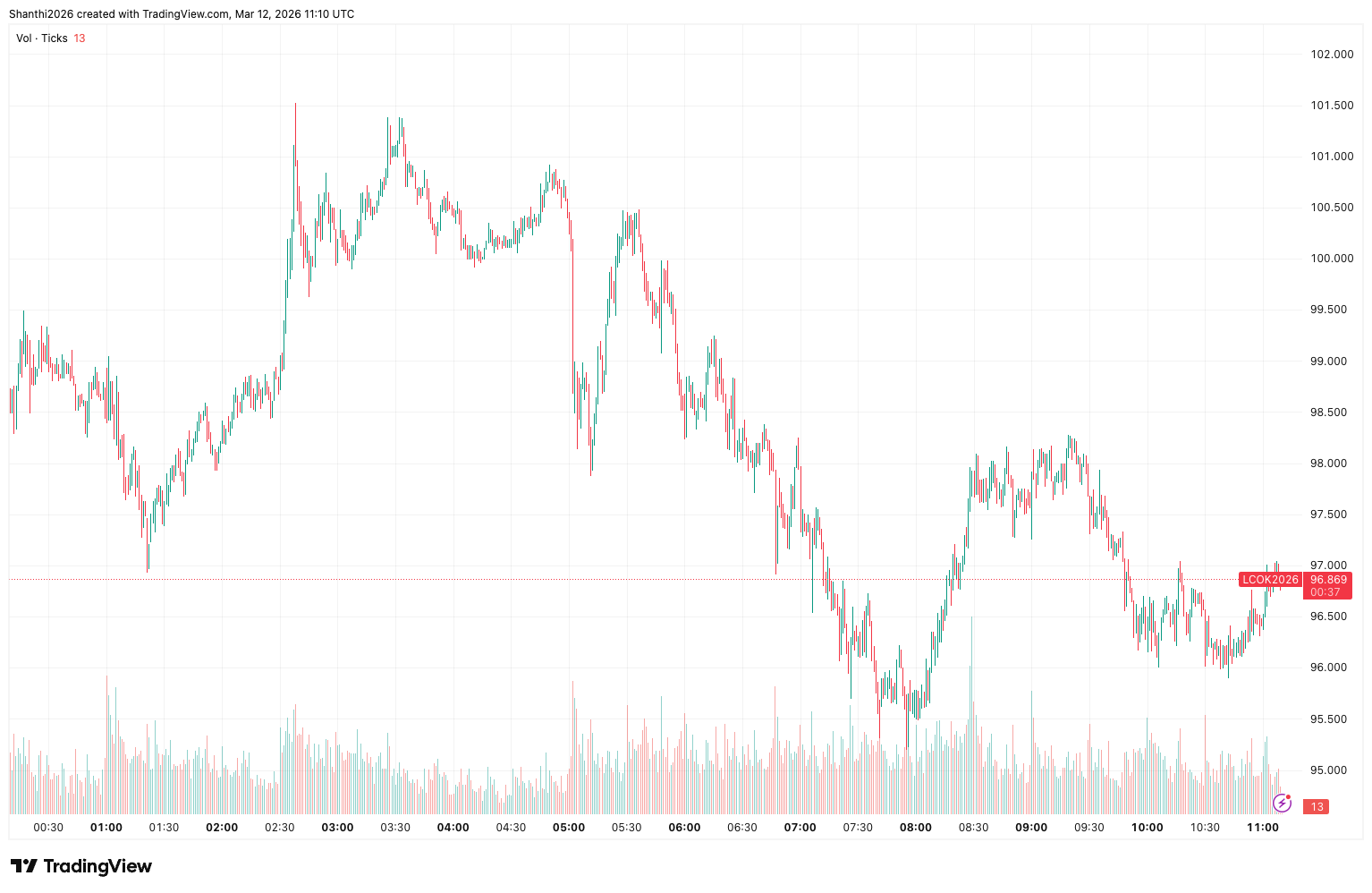
- The Brent crude futures contract (LCO) trading on the Intercontinental Exchange (ICE) rose to a peak of $101.53 in the Asian session before giving back some ground. At last check, the contract tied to the Brent benchmark was up over 5% at nearly $97 a barrel.
- The West Texas Intermediate (WTI) crude oil futures contract (CL) trading on the CME Group’s NYMEX climbed to an intraday peak of nearly $96 before pulling back. The CL contract was last seen at a little over $91.
Both contracts surged to a near-term high of about $120 on Monday before the rally cooled after G7 leaders moved to reassure markets with a coordinated release of a record 400 million barrels from strategic oil reserves. U.S. President Donald Trump further tempered the rally by suggesting the war could end soon, helping place a lid on prices.
Brent Crude Futures (ICE) 1-Day Chart
Source: TradingView
Escalating Crisis Takes Shine of IEA Headline: Just when it was believed that the International Energy Agency’s (IEA) confirmation on Wednesday that the agency’s 32 member nations would make available a record 400 million barrels from their emergency reserves would soothe supply concerns, the crisis escalated in the Persian Gulf region.
Iran stepped up attacks on shipping traffic and energy infrastructure in the region in order to pressure the U.S. and Israel to halt their bombardments, AP reported. Tehran went on a rampage by hitting a container ship off the coast of Dubai, caused a blaze near Bahrain’s international airport, launched drone attacks on a major Saudi oil field and attacked the Iraqi port of Basra, halting operations at the country’s oil terminals.
Iran’s Islamic Revolutionary Guard Corps (IRGC) has reportedly stated that it would not allow even a “liter of oil” through Hormuz and will target any vessel linked to the U.S., Israel and their allies. A spokesperson of the outfit asked the world to brace for $200 a barrel oil.
Iran’s state-controlled news agency IRNA said the “U.S.-owned vessel ‘Safe Sia,’ sailing under the flag of the Marshall Islands and considered a strategic asset of the American military, was struck in the northern Persian Gulf.”
Economists Wary of Reserve Release’s Near-Term Impact: While the IEA’s pledge of coordinated release may have brought a sense of calm in the market, it is seen as transient. ING Commodities Strategists Warren Patterson and Ewa Manthey raised concerns about the speed at which proposed oil release will reach the market and whether it would be enough to meet the demand until oil begins to flow through the Strait of Hormuz again.
Doing the math, the strategists said the U.S.'s 172-million-barrel reserve release would begin next week and would take 120 days to complete. This works out to daily U.S. release of 1.4 million barrels per day (mb/d), which is far short of the supply losses from the Persian Gulf, they said.
The IEA also warned of the impact of a prolonged war. In its March monthly oil report, the agency said, “The war in the Middle East is creating the largest supply disruption in the history of the global oil market.” The ultimate impact will depend “not only on the intensity of military attacks and any damage to energy assets, but also, crucially, on the duration of disruptions to shipping through the Strait of Hormuz,” it added.
The agency estimates that oil supply would plunge by eight 8 mb/d in March, with the shortfall from the Persian Gulf region partly offset by higher output from non-OPEC+ producers, Kazakhstan and Russia. “Adequate insurance mechanisms and physical protection for shipping are key to the resumption of flows, which is of paramount importance for the oil market.”