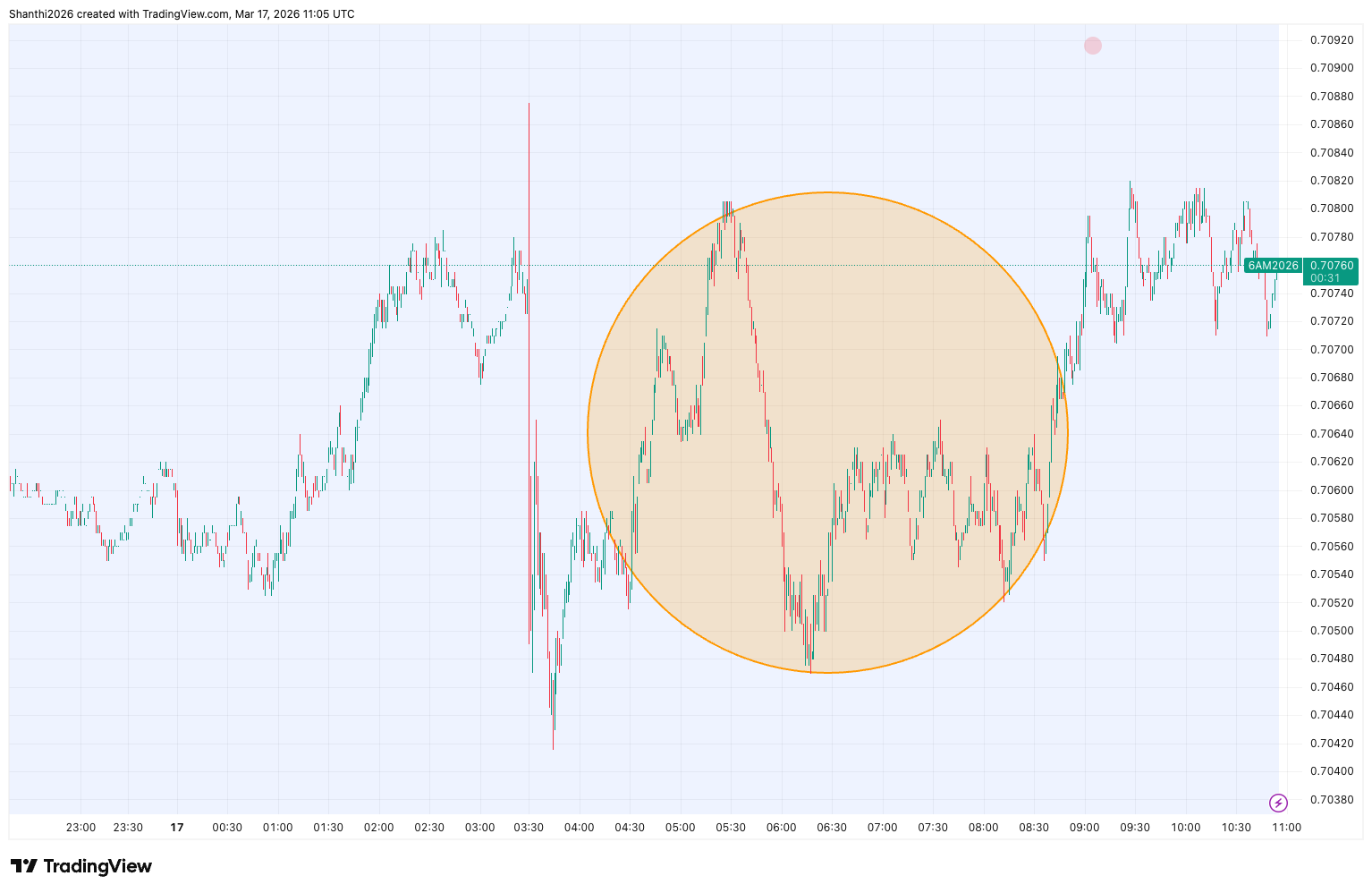
The AUD/USD futures (6A) moved modestly higher following the Reserve Bank of Australia’s (RBA) second rate hike of the year. The currency futures struggled initially only to decisively move higher by the early New York session.
Thus, the RBA became the first Group of ten (G10) central bank to respond to the ongoing war between Iran and the U.S. in the Middle East that has sent crude futures prices spiralling upwards.
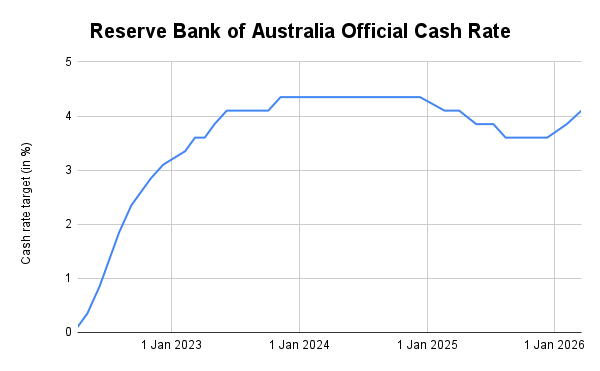
The Verdict: Australia’s central bank raised its benchmark interest rate, called the official cash rate, by 25 basis points for a second straight month. The decision to lift the rate to 4.10% was adopted by a narrow 5-4 vote margin.
Data Source: RBA
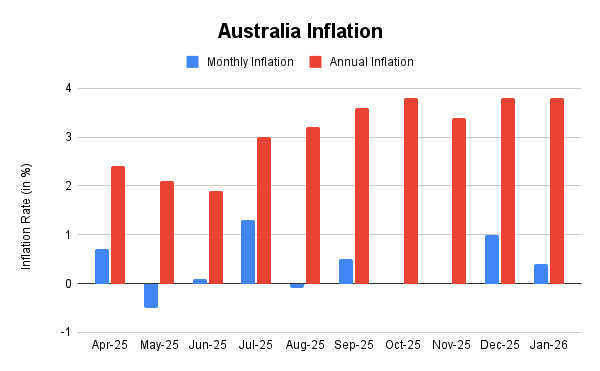
In a statement, the Monetary Policy Board said recent data have confirmed the pick up inflationary pressure in the second half of 2025.
Data Source: RBA
The central bank also viewed that the labor market has tightened a little and capacity pressures were slightly greater than previously anticipated. Delving in the geopolitical situation, the RBA said:
“Developments in the Middle East remain highly uncertain, but under a wide range of possible scenarios could add to global and domestic inflation.”
The RBA expects inflation to remain above target for some time and it also acknowledged the prevalence of upside risks to inflation, including inflation expectations.
The board also underlined the central bank’s data-dependent stance:
“it will pay close attention to developments in the global economy and financial markets, trends in domestic demand and the outlook.”
AUD Sells But Recovers: The contract tied to the AUD/USD exchange rate fell initially before recovering. ING forex strategist Francesco Pesole said the split vote was initially viewed by the market as a dovish signal, with the sell-the-news move also playing a part. The commodity currency reversed course after Governor Michele Bullock’s press conference.
Source: TradingView
Bullock’s comments that the deliberation was not on whether to tighten policy but on the timing of the hike and her hawkish inflation remarks helped the AUD/USD futures to reverse the losses.
Pesole, however, said he saw some signs of jadedness in the AUD’s bull run. The contract has rebounded nicely since hitting a near-term low in the aftermath of the U.S. President Donald Trump’s April 2 tariff announcement. Calling the uptrend as “stretched long-term positioning” the ING strategist said a flow of positive news is needed to fuel short-term rallies.
Will Fed Resist Calls for Rate Hike? Following the RBA, its North American counterparts, the U.S. Federal Reserve and Bank of Canada are all set to make their respective monetary policy announcements on Wednesday. Odds are overwhelmingly stacked up in favor of both central banks pausing benchmark interest rates at current levels.