
Oil prices will decline yet again in 2026 as production outstrips demand, according to the Energy Information Administration’s short-term energy outlook report released on Tuesday.
Supply Glut in the offing? The EIA expects Brent crude oil price to average $58/barrel in 2026 and ease further to $53/barrel in 2027. This would mark a back-to-back decline as Brent crude futures declined nearly19% in 2025. If the forecasts prove to be accurate, oil is on track to fall by about 5% this year.
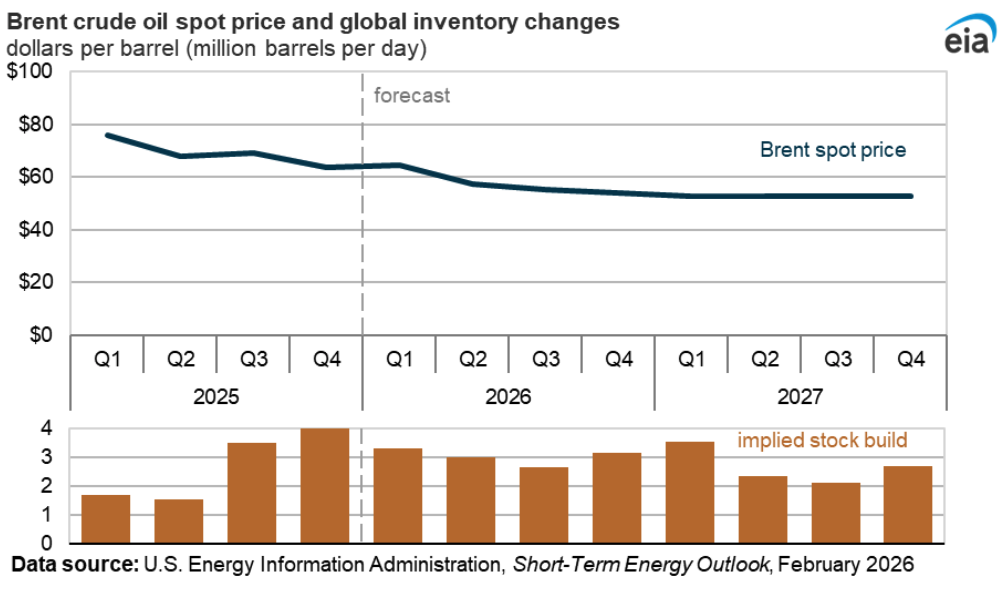
Source: EIA
In the report, EIA noted that Brent crude oil averaged $67/barrel in January, the highest level since September last, thanks to weather-related supply disruptions and Iranian tensions.
OPEC+ policy and China’s continued strategic inventory build, however, will limit price declines, EIA stated.
The agency expects the Henry Hub spot price to average $4.30/million Metric Million British Thermal Units (MMBtu) after increased heating, reduced production and large inventory withdrawals drove the price up 81% month over month in January to an average of $7.72 MMBtu. It, however, expects price increases to moderate later in the forecast period due to an anticipated increase in production as drilling activity rises.
After a 3% MoM drop in production in January, natural gas output will likely ramp up in the second half of the year as new pipeline capacity comes online in the Permian and producers increase drilling activity in response to higher prices.
EIA expects global liquid fuels consumption to rise by 1.2 million barrels/day in 2026 and by 1.3 million barrels per day in 2027, with growth driven almost entirely by non-OECD countries, specifically those in Asia.
How Energy Commodities Reacted? The WTI crude oil futures (CL) continued to languish, and traded down by 0.44% at last check. Following a near-term uptrend seen since mid-December, the rally in CL has stalled and a sideways move is seen since the start of February. On the upside, $66 will likely serve as a stiff resistance, while on the downside, $62.5 could offer strong support.
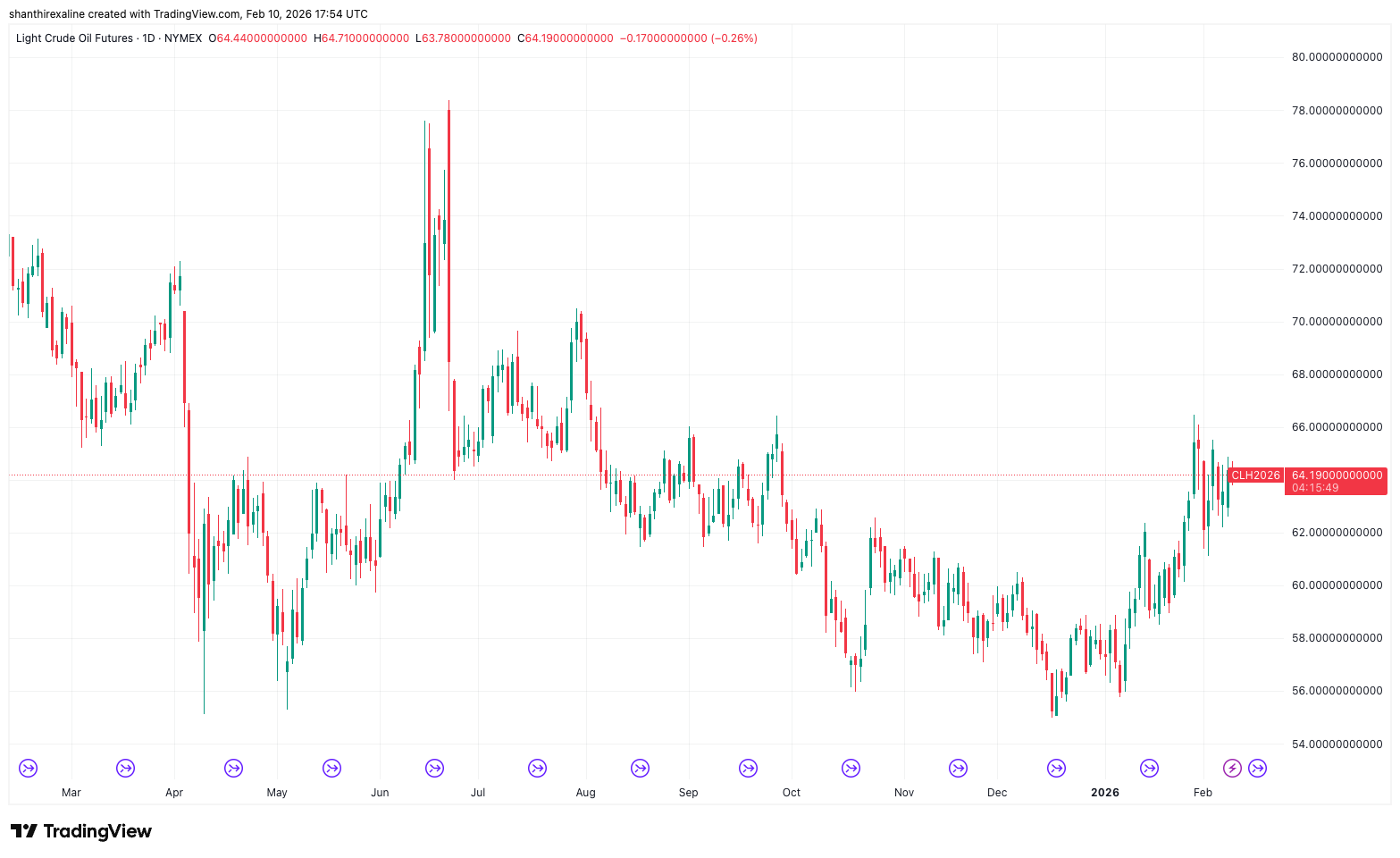
Source: TradingView
Oil futures came under pressure before the release of the EIA report as weak U.S. retail sales data dampened the demand outlook.
Meanwhile, natural gas futures firmed up on Tuesday, climbing nearly 1.50%, with the upside attributable partly to seasonal demand factors.