
U.S. consumer prices slowed down in January, according to a report released by the Labor Department’s Bureau of Labor Statistics on Friday.
January Print’s Finer Details: The consumer price index (CPI) rose 0.2% month-over-month (MoM) in January, easing from December’s 0.3% gain and coming in slightly below expectations, as economists had forecast another 0.3% increase.
The year-over-year rate, however, decelerated to 2.4% from 2.7%. Economists expected a more modest slowdown to 2.5%. The annual inflation rate was the slowest since April 2025, which saw a 2.3% increase.
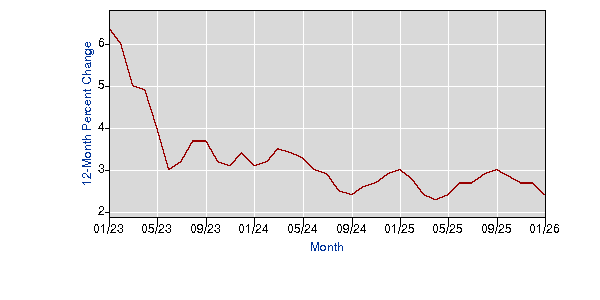
Source: BLS
BLS said shelter prices rose 0.2% MoM in January, slowing from the 0.4% increase in December. Food prices grew at a slower rate, while energy prices fell sharply.
The core reading that strips off food and energy, rose 0.3% MoM, accelerating from the 0.2% pace in December. The annual core CPI inflation slowed to 2.5% from 2.6%. Both readings were in line with expectations.
Ahead of the report, Morgan Stanley economists said they expected stronger residual seasonality due to tariffs likely adding five basis points to the core reading even with a possible partial correction in CPI seasonal factors. Payback from shutdown related weakness likely contributed two basis points, they added.
The economists also expect additional strength in airfares and vehicle prices—categories less affected by seasonality.
Read Across For Interest Rates: The week’s economic data has largely been mixed, clouding the interest rate outlook. The December retail sales report came in notably weaker than expected, while the January non-farm payrolls (NFP) report showed stronger-than-expected job gains. Just when traders began factoring in a pause decision following the NFP report, the weekly jobless claims report fell less than expected, questioning the labor market strength.
All along, Federal Reserve officials have been suggesting that they would err on the side of caution.
Implications For Futures Traders: A slowdown in the core print could trigger a relief rally in rate-sensitive assets, supporting Treasury futures and equity index futures as traders rebuild easing bets. On the other hand, dollar futures will likely come under pressure.
The upcoming week, although shortened due to the President’s Day holiday on Monday, has its fair share of economic catalysts, including the advance fourth-quarter GDP estimate, the December personal income and spending report, which comprises the Fed’s favorite inflation gauge, the price consumption expenditure index, private sector activity readings and a consumer sentiment data.