Japan’s Liberal Democratic Party (LDP) under its conservative leader Sanae Takaichi won a resounding victory in the general election held on Sunday, and hopes of an expansionary fiscal and monetary policy perked up risk appetite, sending stocks higher.
Bond prices fell initially, although signals pointing to a “responsible, proactive” stimulus policy provided a floor. The yen declined sharply as the election result trickled but it has since cut its losses.
Why the euphoria? The LDP bagged 316 out of the 465 seats, securing more than two-thirds majority, aka super majority, handing Takaichi a landslide victory. The party won the most seats for a single party in postwar history, according to Japan Times. Along with its partner Japan Innovation Party, the ruling coalition now has 352 seats.
Commenting on the election results, ING economists said, “The coalition's win will give Takaichi more freedom in policy decisions and strengthen her ability to pursue economic and foreign policy goals.”
Speaking on television, Takaichi reportedly said she would speed up discussions on reducing the food tax. She also clarified that her comments about weak yen had been taken out of context and that she aims to build an economy resilient to forex fluctuations.
Nikkei Pushes To Fresh Record: The Nikkei/Yen Futures scaled a new peak of 58,620 before pulling back. As Japanese Government Bond (JGB) prices slipped, yields climbed, with 10-year JGB yield rising 3.24% to 2.296%.
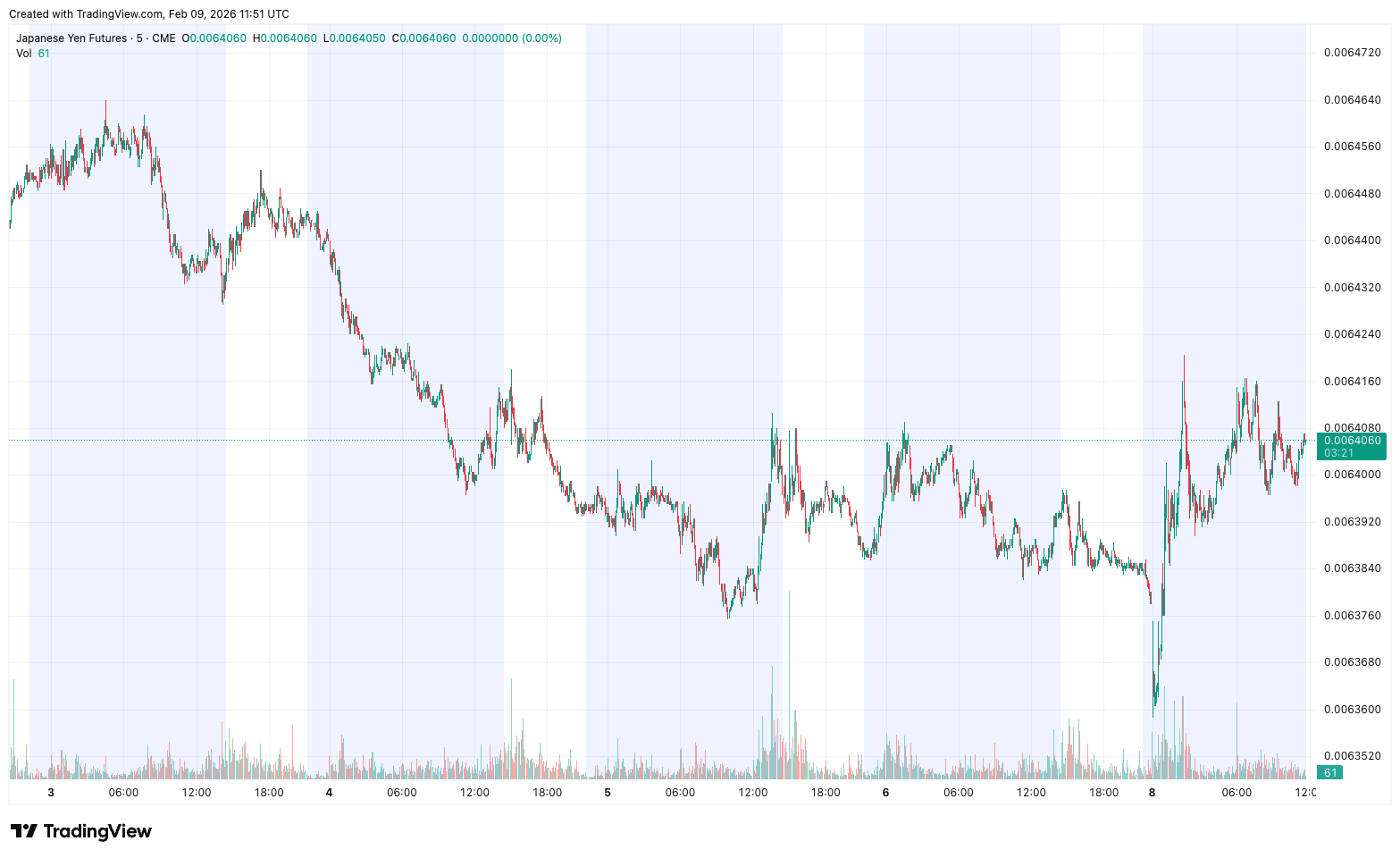
The Japanese Yen futures (6J) trading on the CME Global Exchange, which weakened initially, made good the losses and traded up 0.34% at last check.
Source: TradingView
How to position amid Japan’s election mandate? ING economists expect the yen to weaken against the dollar, falling to as low as 160 yen. That said, the economists expect the yen to change its course and appreciate in the second half of 2026 when rate differentials narrow.
The election outcome suggests an easy monetary policy environment, potentially sending the yen lower. Traders will, therefore, look to sell the yen strength rather than buy the dip. For confirmation of the downtrend, futures traders can rely on open interest. Rising open interest would mean new money is entering in the direction of the move.
The Nikkei/Yen futures breaking to fresh highs reflects renewed confidence in the export-heavy domestic market and funding-currency dynamic.