
A leading indicator of core consumer prices in Japan slid below the Bank of Japan’s (BoJ) target in February, confounding the central bank’s monetary policy path. The Yen Futures (6J) came under selling pressure immediately after the release of the data but has since then recouped losses.
Inflation Tamed? Core consumer prices, which excludes fresh food, in Tokyo rose 1.8% year over year (YoY) in February, marking the smallest gain since Oct. 2024, official numbers released by the Ministry of Internal Affairs showed Friday. Economists expected the annual rate of the consumer price index (CPI) to slip to 1.7% from the 2% rate witnessed in January.
Consumer prices excluding fresh food and energy, however, came in at 2.5%.
The data confirms that Prime Minister Sanae Takaichi’s anti-inflationary measures such as subsidising utility is bearing fruit. Deceleration in food prices growth also led to the easing.
Meanwhile, pricing trends nationwide showed a pick up in pace. The headline CPI for Japan, accelerated to 1.5% in February from 1.4% in January.
The February’s inflation data, especially that for the Tokyo region will likely place the Bank of Japan in a dilemma. In its January rate-setting meeting, the central bank kept its benchmark rate — the uncollateralized overnight call rate — unchanged at 0.75%. At that time, Governor Kazuo Ueda emphasized the bank will assess the impact of prior hikes before deciding on the next, and could intervene in bond markets to limit yield spikes.
Separately, government data showed monthly industrial production growth rebounded in January, although by much less than expected. The forecast for February and March pointed to a dip in industrial output. On the other hand, large retailers’ sales accelerated both month over month and YoY.
Economists React: ING economists said the high base for rice prices will weigh on inflation throughout the year. They also expect temporary volatility in monthly changes as energy subsidies are set to end soon.That said, they expect other government welfare programs, such as free tuition, are likely to lower inflation in the latter part of the year.
“Although core inflation eased, we believe underlying price pressure remained sticky, as most of the price decline was driven by goods rather than services,” ING stated.
Yen Futures Dip But Recover: The futures contract tied to the the JPY/USD exchange rate, which retreated immediately after the data, has reversed course and were modestly higher at last check.
The Yen futures have been range-bound since November last, trading between 0.00631 and 0.00658, currently moving in the middle of the range.
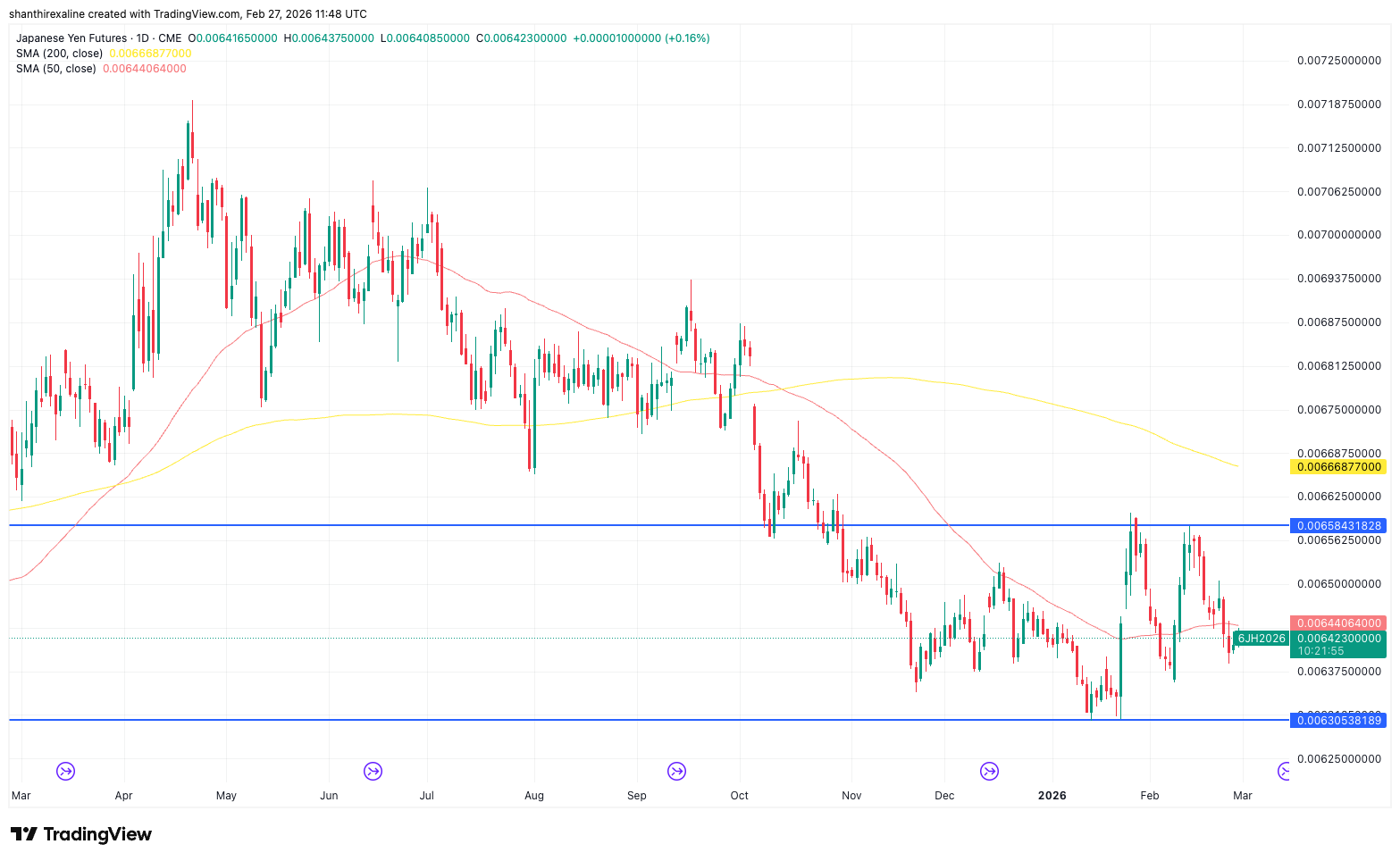
Source: TradingView
Policy Implications: ING economists see the inflation trajectory to support modest rate hikes by BoJ. “Going forward, inflation is expected to stay below 2%. Yet, service prices, primarily driven by rising labour costs and strong demand, are likely to remain firm,” they said.
The economists said they would monitor April inflation data as many businesses set new prices based on their costs, at the beginning of the fiscal year. They expect the BoJ to act in June, once the results of the Spring wage negotiations and the April CPI figures have been confirmed.
Saxo Bank stated that the BoJ will show caution in raising rates, especially with pro-reflation academics joining the board. Governor Ueda plans to assess economic data in March and April before making rate decisions, it added.
Read Next: Futures Traders Stay Cautious Despite Nvidia Blowout Earnings as Markets Await Data and Fed Signals