The ICE-listed Brent Crude futures (LCO) spiked past $119 in the Asian session on Thursday after the geopolitical tensions in the Middle East worsened, compounded retaliatory attacks against each other by Israel and Iran.
The escalation comes as the war between Iran and the U.S.-Israel alliance entered its 20th day, with no resolution in sight.
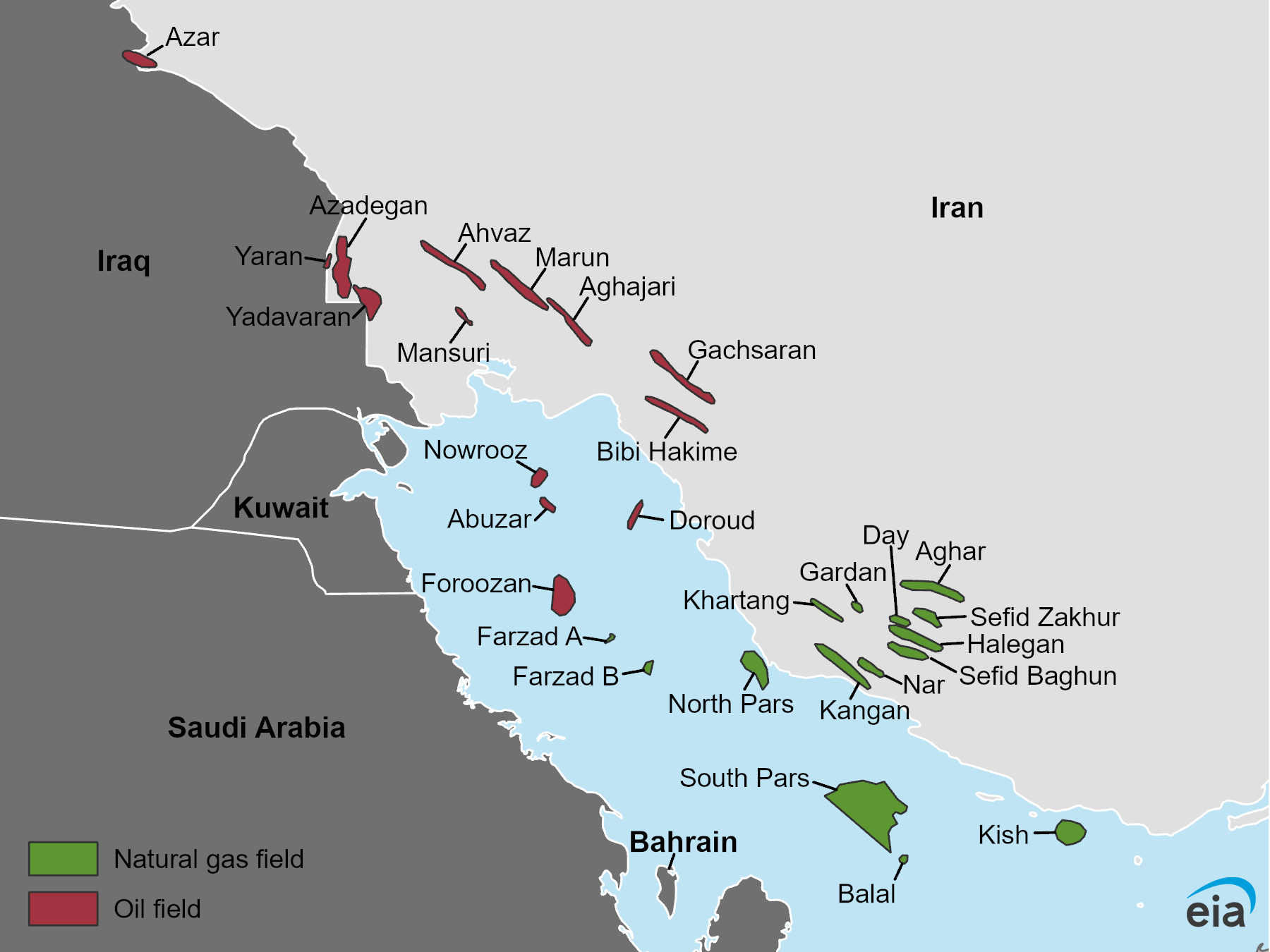
What has sparked the renewed tensions? Iran’s South Pars gas field, which it operates along with Qatar and houses one of the world’s largest gas reverses, was targeted in missile attacks.
Source: EIA
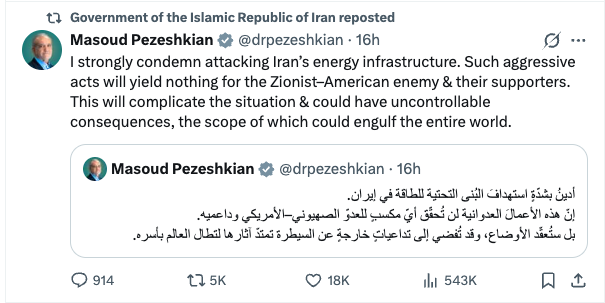
While Israel has not claimed responsibility for the attacks, Iran has blamed Jerusalem and its ally, the U.S. In a post on X, Iranian President Masoud Pezeshkian said the attack on Iran’s energy infrastructure will “complicate the situation & could have uncontrollable consequences, the scope of which could engulf the entire world.”
In a retaliatory attack, Iran targeted the energy infrastructure of fellow Gulf nations, Saudi Arabia, UAE and Qatar.
For his part, U.S. President Donald Trump also pointed to Israel as the orchestrator of the most recent attacks and denied any U.S. or Qatari role. But, in a strongly worded post on his Truth Social account, Trump said any further attacks on Qatar’s liquefied natural gas (LNG) facility would not be tolerated.
While assuring that Israel will make no more attacks, the president said if Iran unwisely decides to attack Qatar “the United States of America, with or without the help or consent of Israel, will massively blow up the entirety of the South Pars Gas Field at an amount of strength and power that Iran has never seen or witnessed before.”
How extensive is the damage from the counterattacks? The South Pars gas field in the south of Iran accounts for about 70% of Iran’s natural gas output, ING said in a report. While the extent of the damage to the facility is still unclear, it has clearly increased the risk for the export of natural gas to Turkey, Iraq and Armenia, the firm added.
According to EIA data, Iran’s natural gas exports amounted to over 500 billion cubic feet (bcf) in 2023.
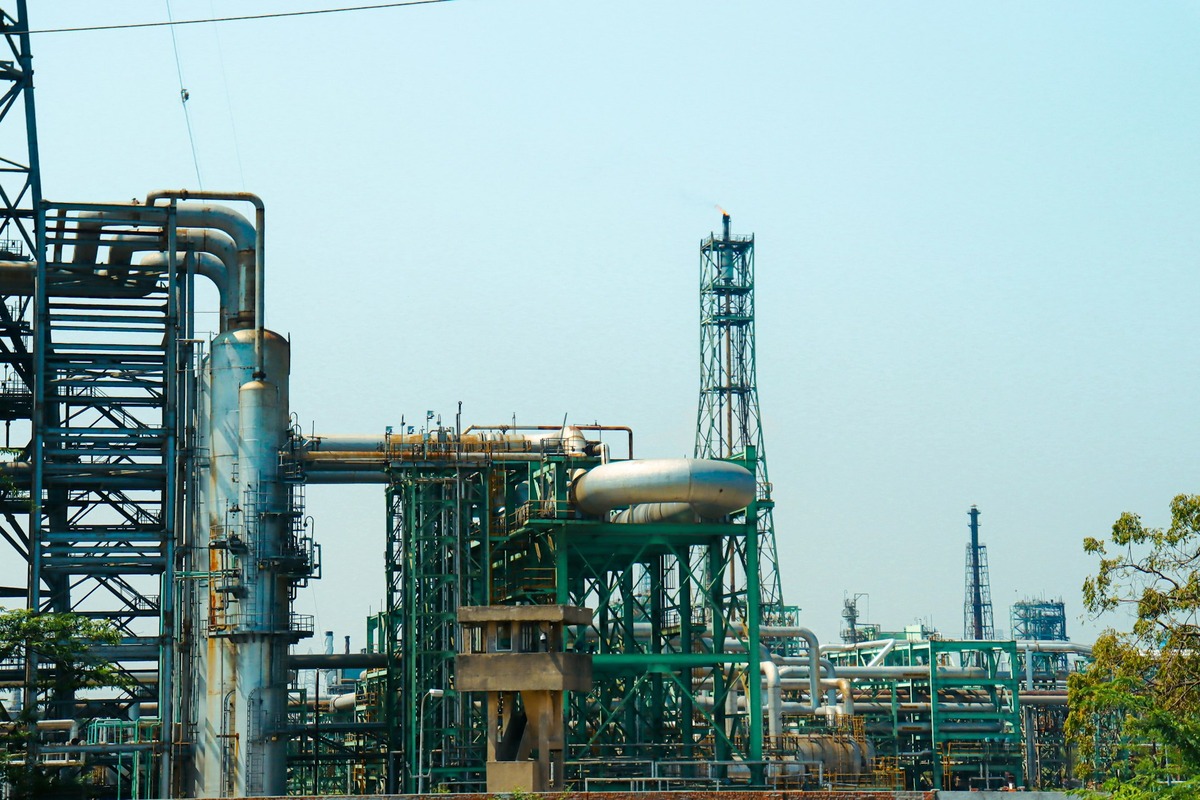
Qatar’s Ministry of Foreign affairs stated that the Iranian attack on its Ras Laffan Industrial City has caused significant damage to the facility. Separately, the country’s Ministry of Interior Affairs said the civil defense forces have contained two of the three fires in the facility and that no injuries have been reported.
QatarEnergy, the world’s largest LNG producer put out a statement in the wake of the attacks, stating that Wednesday’s attack has resulted in extensive damage to the Pearl GTL (Gas-to-Liquids) facility, and that several of its LNG facilities were the subject of missile attacks, causing sizeable fires and extensive further damage.
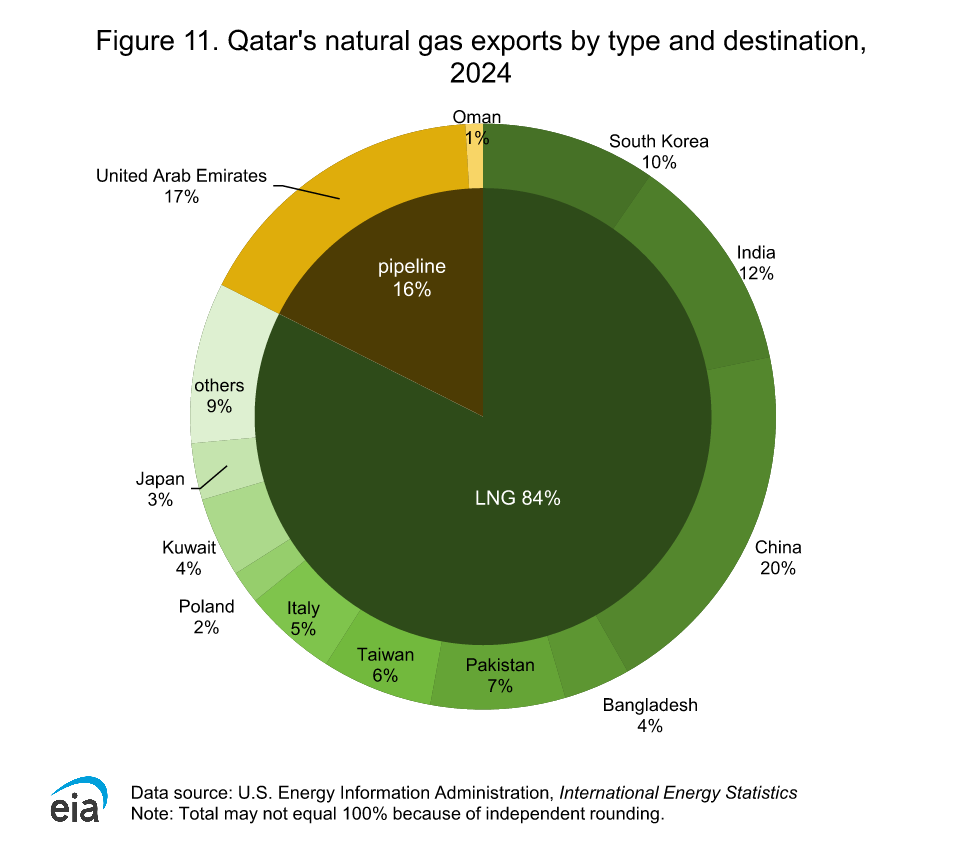
LNG production at Ras Laffan complex, located 80 km to the northeast of the Qatari capital. Doha, saw suspended on March 2 following an attack in the early days of the current war. The facility produces about 20% of the world’s LNG supply.
Source: EIA
How markets are reacting: The ICE front-month Brent futures contract has pulled back from the day’s high of $119.11 and currently trades at sub-$115 level. The West Texas Intermediate (WTI) grade crude oil trading on the NYMEX also touched a high of $99.17 before easing back.
The ICE Brent crude’s premium over its WTI counterpart is now at 11 year high, according to Oilprice.com.
Also, the forward contracts have seen backwardation amid the supply shock, with the front-month contract trading at a premium of about $30 over the six-month futures.
Heating oil futures (HO) and Natural gas futures (NG) trading on the NYMEX also rose over 4% on Thursday.
Meanwhile, the Dutch TTF Natural Gas futures, the European benchmark for the commodity, jumped more than 16% to 63.73 euros on the NYMEX.
Speculative positioning in energy futures also soared amid the Middle East conflict. The Commodity Futures Trading Commission’s latest weekly Commitment of Traders report showed that the combined crude oil net long in WTI and Brent jumped by 83k contracts to a 15-month high of 466k, Saxo Head of Commodity Strategy Ole Hansen said in a report. The strategist said the unprecedented stockpile release coordinated by the International Energy Agency (IEA) apparently did not bring much relief.
ING noted that investment funds increased their net long positions in TTF, with funds having bought 37.9 terawatt-hour (TWh) in the recent reporting week, with the net long position at 234.3 TWh. This marked the largest position since February 2025.
The reopening of the Strait of Hormuz, a key chokepoint for oil shipments from the Persian Gulf region, is important for the near-term price trajectory. Strategists have begun factoring in a range of scenarios, ranging from ceasing of intense conflict within the next two weeks to a protracted war.
If the crisis continues until the end of the month, oil prices could test $150 or above, Amena Bakr, Kpler's Head of Middle East and OPEC+ Insights, said in an interview with CNBC. More importantly, the world will also have to contend with the offshoots of the oil shock, including an inflation spike and financial stress among businesses and consumers.
Read Next: Fed Holds Rates Steady Despite Nudging Up Inflation Estimates, Flags Uncertainty Over US-Iran War