
The Japanese economy grew stronger than initially estimated, according to revised estimates released by the nation’s Cabinet Office on Tuesday. Reacting to the data, the Yen Futures (6J) bounced off a near-term support, although the contract is down more than 7% over the past year.
Crunching Revised Q4 Numbers: The year-over-year annualized fourth-quarter Japanese GDP growth was revised sharply higher to 1.3% from the preliminary estimate 0.2%. This compares to the 2.6% contraction witnessed in the third quarter. Economists, on average, estimated a more modest 1.2% growth for the fourth quarter.
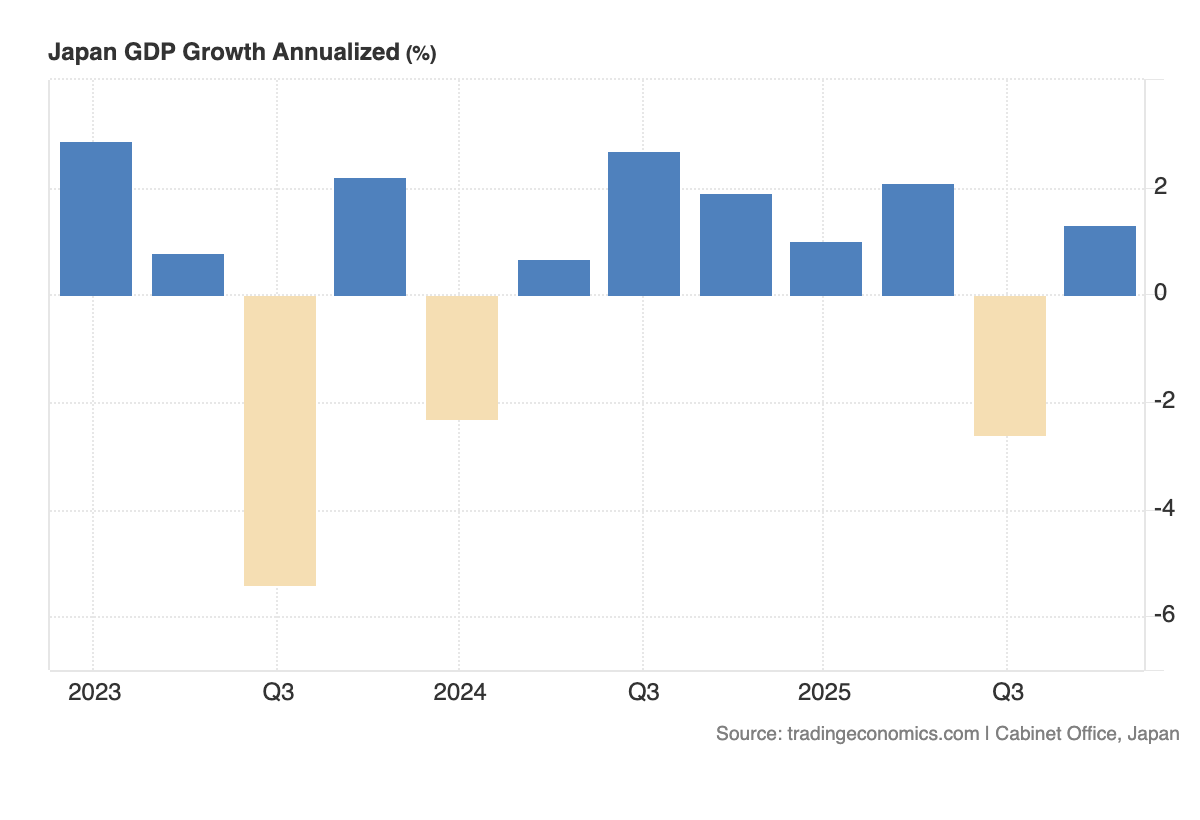
Source: Japan’s Cabinet Office Data via Trading Economics
The sharp upward revision reflected stronger than initially estimated private non-residential investment, which spiked 1.3% compared to the 0.2% growth estimated initially. Private consumption, which accounts for more than half of the Japanese economic activity, rose a more modest 0.3%.
External demand, which is calculated as a deduction of imports from exports, remained unchanged.
Quarter-over-quarter, the economy grew 0.3%, up from the 0.1% initial estimate, but aligning with the consensus estimate.
While the fourth-quarter data painted a rosy picture, a separate report showed consumer spending could continue to remain anemic.
A report released by Japan’s Ministry of Internal Affairs and Communications showed that household spending in Japan fell 1% year over year (YoY) versus expectations for a 2.4% climb. On a monthly basis, the measure fell a steeper 2.5%, belying expectations for 0.8% growth.
What Economists Say: ING’s Senior Economist for Japan and South Korea Min Joo Jang said she expects Prime Minister Sanae Takaichi-led administration’s energy subsidies, and strong wage growth to boost private consumption in the first quarter. She also sees government spending rising.
While inventories were a drag on growth in the fourth quarter, the restocking cycle would reverse and begin contributing positively to the current quarter.
Commenting on the household spending data, Min said despite the weak headline number, underlying spending on goods and private services remained resilient. “Combined with solid wage data (real wage growth of a 1.4% YoY in January) from yesterday, recent trends support our view that private spending is expected to remain firm in the current quarter,” the economist said.
Min also sees domestic inflation remaining contained despite the ongoing U.S.-Iran war that sent crude oil spiking toward the $120 level before it moderated. According to the economist, government’s petroleum subsidies and the abolishment of the gasoline provisional tax rate at the end of 2025 will likely keep a lid on domestic gasoline prices.
Also, the Japanese government announced Tuesday that it is prepared for a potential release of strategic oil reserves but any release would be coordinated with Group of Seven (G7) partners. Public and private reserves will likely meet domestic demand for about 254 days.
Monetary Policy Outlook: ING does not see the Bank of Japan (BoJ) acting when it deliberates on rates next week due to the uncertainty stemming from the Middle East tensions. The tame energy inflation should give the central bank time to examine how recent developments will impact prices, the firm said.
Since tracking inflation, especially services prices, in April is ideal, given companies adjust their prices during the first month of the fiscal year, ING sees June as a possible time for the next hike.
How Yen Reacted: The Yen futures, which staged an uneven recovery following the data, rose to an intraday high of 0.0063625, before giving back most of the gains. The contract tied to the JPY/USD exchange rate is currently trading modestly higher.
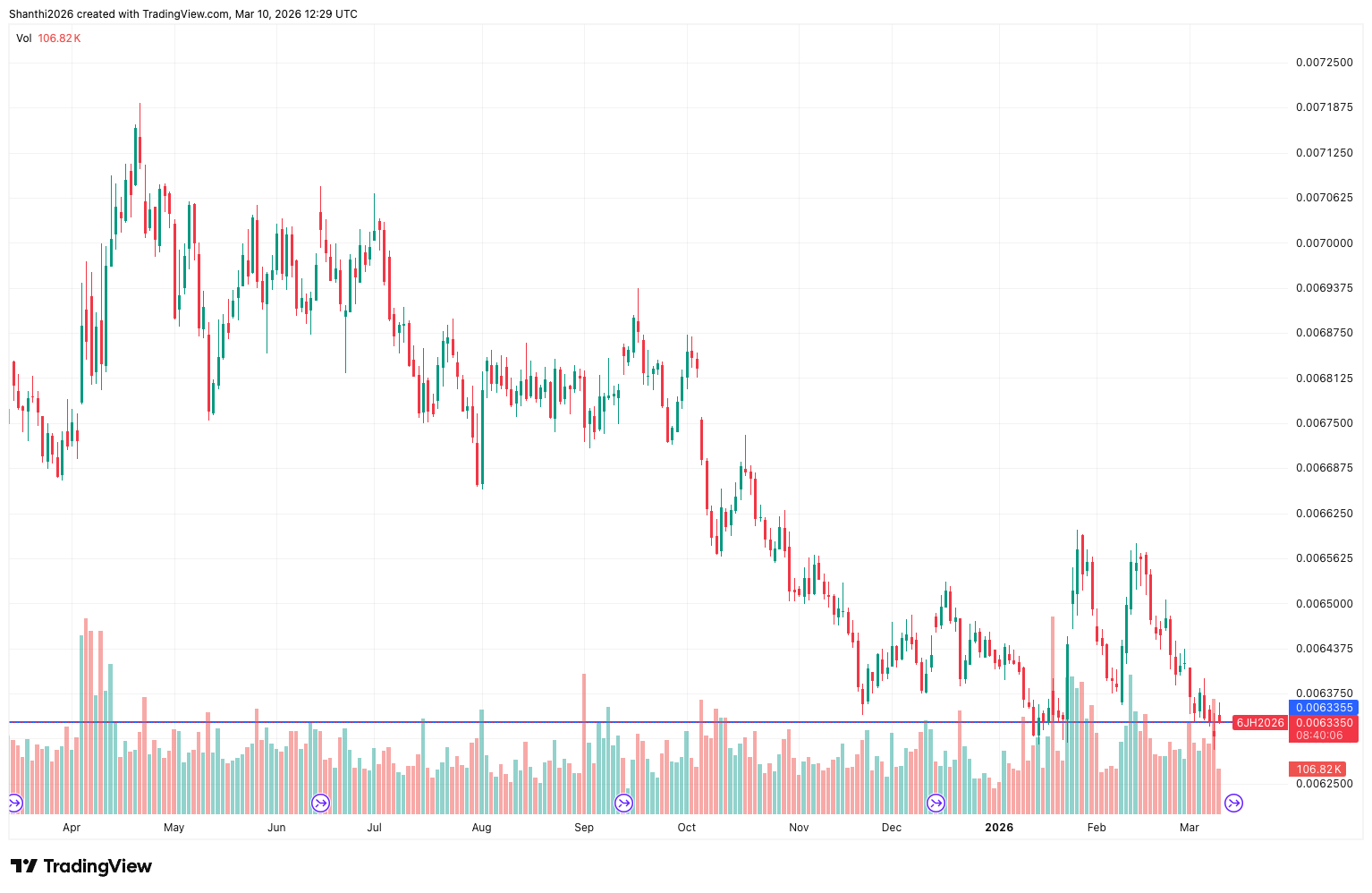
Source: TradingView
Traders may consider taking selective long positions on dips, using the recent support area as a risk marker, while watching upcoming February inflation data (due on March 24) and central bank guidance for confirmation of the June hike narrative.