
A private inventory report released late Tuesday showed a sharp reduction in crude stockpiles in the week ended Jan. 30, auguring well for prices that has seen a solid uptick in the new year.
How Stocks Stacked Up
- Crude stocks fell by 11.10 million barrels in the recent reporting week following a mere 0.247 million barrel dip in the week ended Jan. 23, according to a report released by the American Petroleum Institute, Trading Economics.com reported. Economists, on average, braced for a 0.7 million barrel build. The reduction marked the steepest drop since Aug. 2023.
- Gasoline inventories, however, rose 4.7 million barrels versus a 415,000-barrel drop in the previous week.
- Distillate inventories declined 4.8 million barrels versus a 2-million-barrel stock build in the previous week.
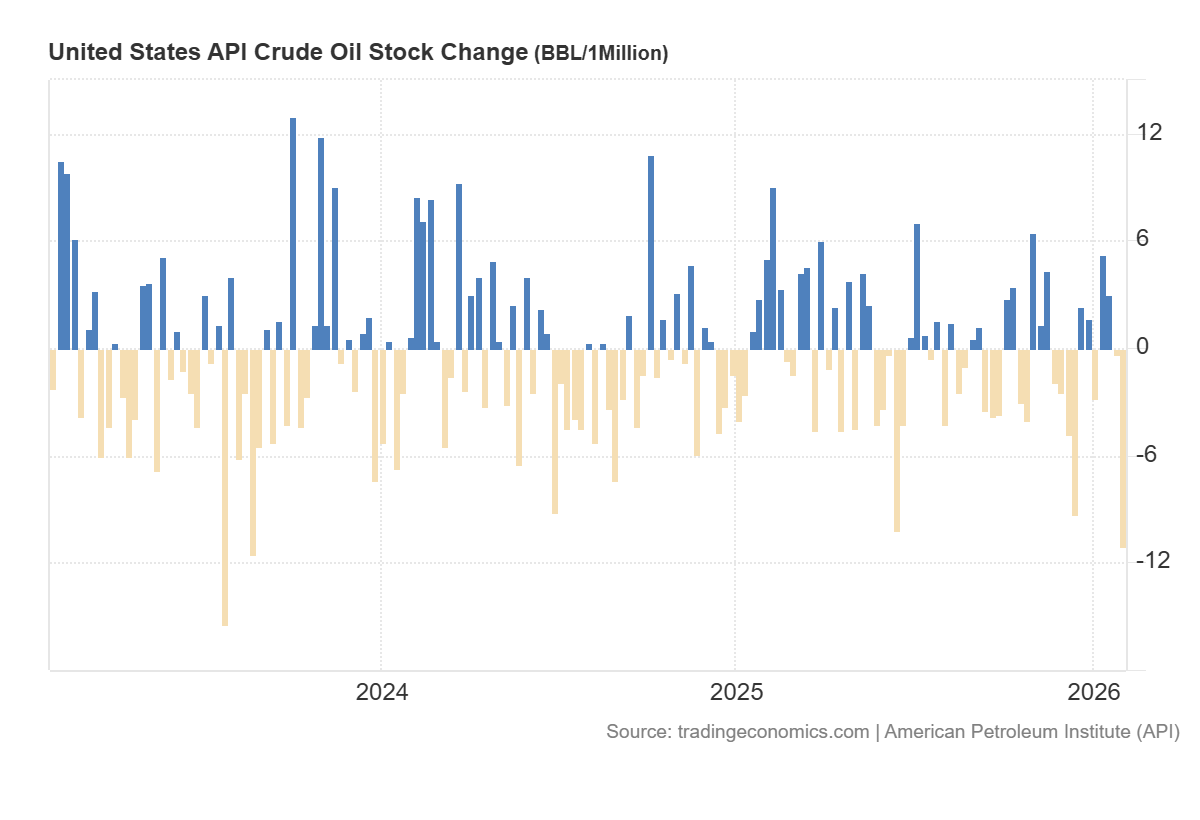
Source: Trading Economics
What To Watch Next? The official inventory report from the Energy Information Administration is due at 10:30 a.m. ET on Wednesday. The consensus estimates call for a 2-million-barrel decline in crude oil stockpiles for the week ended Jan. 30, following the previous week's 2.295 million-barrel drop.
Futures traders may also focus on the other details of the report, such as:
- Crude oil imports, Cushing crude oil inventories
- Distillate production and inventories
- Heating oil production and inventories
- Gasoline production and inventories
- Weekly refinery use rates
Crude’s Resurgence: After dropping about 20% in 2025, crude oil futures moved sharply higher in January, thanks to geopolitical tensions that fanned supply concerns.
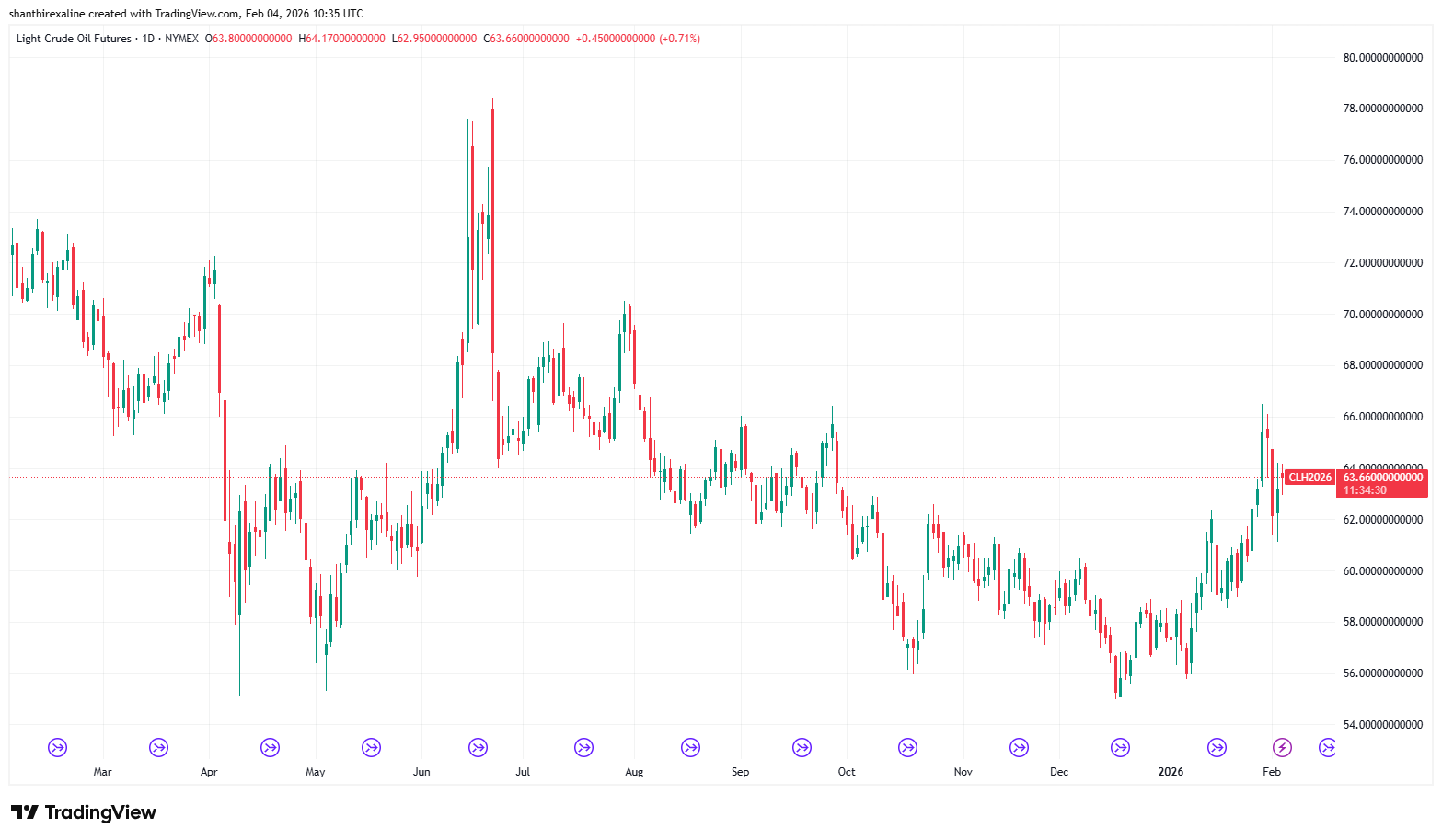
Source: TradingView
An unusual Arctic blast pushed RBOB gasoline futures (RB) price sharply higher in late January, with the strength continuing in February. On Tuesday, gasoline futures topped $2 for the first time since mid-November.
Also bullish for energy commodities are the simmering geopolitical tensions involving Iran, fairly resilient global growth and the prospect of further monetary policy easing.
How Traders Should Play Bullish Energy Setup: Futures traders can look to buy any potential dip in the front-month WTI crude oil futures contract. The recent swing lows could be used as defined risk levels. They may be well advised to watch the EIA weekly report for confirmation. Further drawdowns and increased refinery utilization suggest prices may continue to grind higher.