
Consumer confidence improved slightly in February, reflecting a less pessimistic view about future conditions, a survey by the Conference Board showed Tuesday. The data point adds to economic evidence that the economy is chugging along nicely despite surrounding uncertainties on multiple fronts.
The E-mini S&P 500 (ES) futures, which showed volatility ahead of the report, spiked sharply higher and have sustained much of the gains since then.
Upside Surprise: The Conference Board’s consumer confidence index rose by 2.2 points to 91.2 in February from an upwardly revised reading of 89 for February. Economists, on average, had expected the index to rise to 87.4 from January’s originally reported reading of 84.5. Notwithstanding February’s improvement, the index still remained below the November 2024 near-term peak of 112.8, which represented a four-year high.
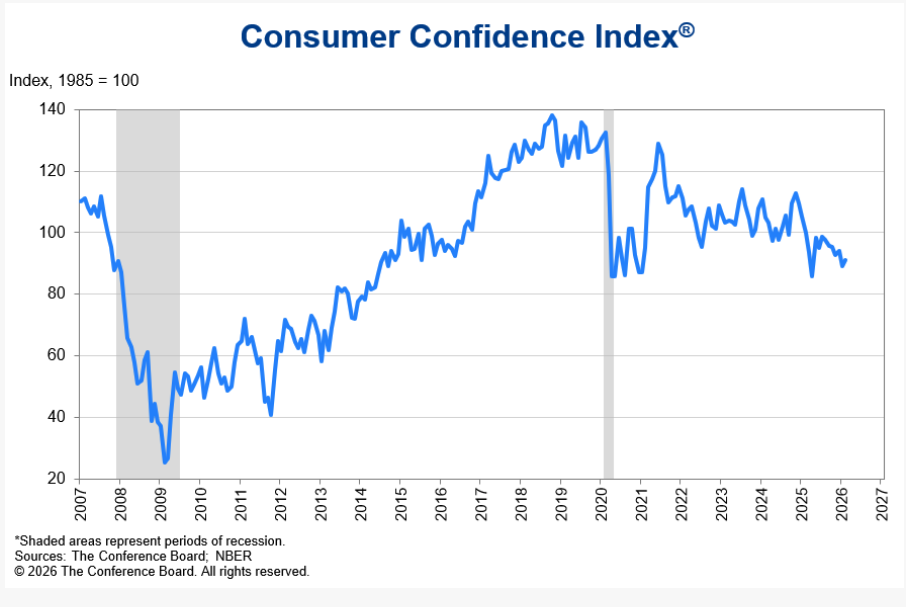
Source: Conference Board
The cut-off data for the survey was Feb. 17, and therefore does not capture the morale in the aftermath of the Supreme Court’s tariff annulment and President Donald Trump’s subsequent announcement of a sweeping 15% levies.
Conference Board’s Chief Economist Dana Peterson said, “Confidence ticked up in February after falling in January, as consumers’ pessimistic expectations for the future eased somewhat.” She noted that four of the five components of the survey firmed up.
Present Tense…Future Perfect: The present situation index fell further as net views on current business conditions fell to +0.7%. But perception of employment conditions improved slightly.
The expectations index improved, with all three expectations components advancing slightly in February. Expectations of business and labor market conditions six months from now became less negative, while expectations for incomes were more positive.
That said, write-in responses from consumers suggested pessimism. Prices, inflation and cost of goods remained at the top of consumers’ minds, and trade and politics were also increasingly mentioned, while labor market mentions eased slightly.
Commenting on the data, LPL Chief Economist Jeffrey Roach said, “Despite the rebound, the trend is still negative.” “The report revealed job market conditions are holding steady, one of the necessary conditions for the Fed as they will likely hold rates steady for the next few meetings.”
The economist expects Inflation to run hotter in the near term, consistent with the ISM prices paid signal but by December, core price consumption expenditure (PCE) should be close to 2.2%.
DX, Yields Rise: Following a couple of hawkish speeches by Federal Reserve officials and the better-than-expected consumer confidence reading, the Dollar Index (DX) futures moved solidly higher but have since given back most of the gains. The 10-year T-note yield was up slightly.
Improving consumer expectations and steady labor conditions support a resilient growth narrative. Buying pullbacks in ES futures could offer tactical upside as sentiment firms. Interest rate divergence may widen, supporting selective long positions in dollar futures against currencies from relatively weaker economies.